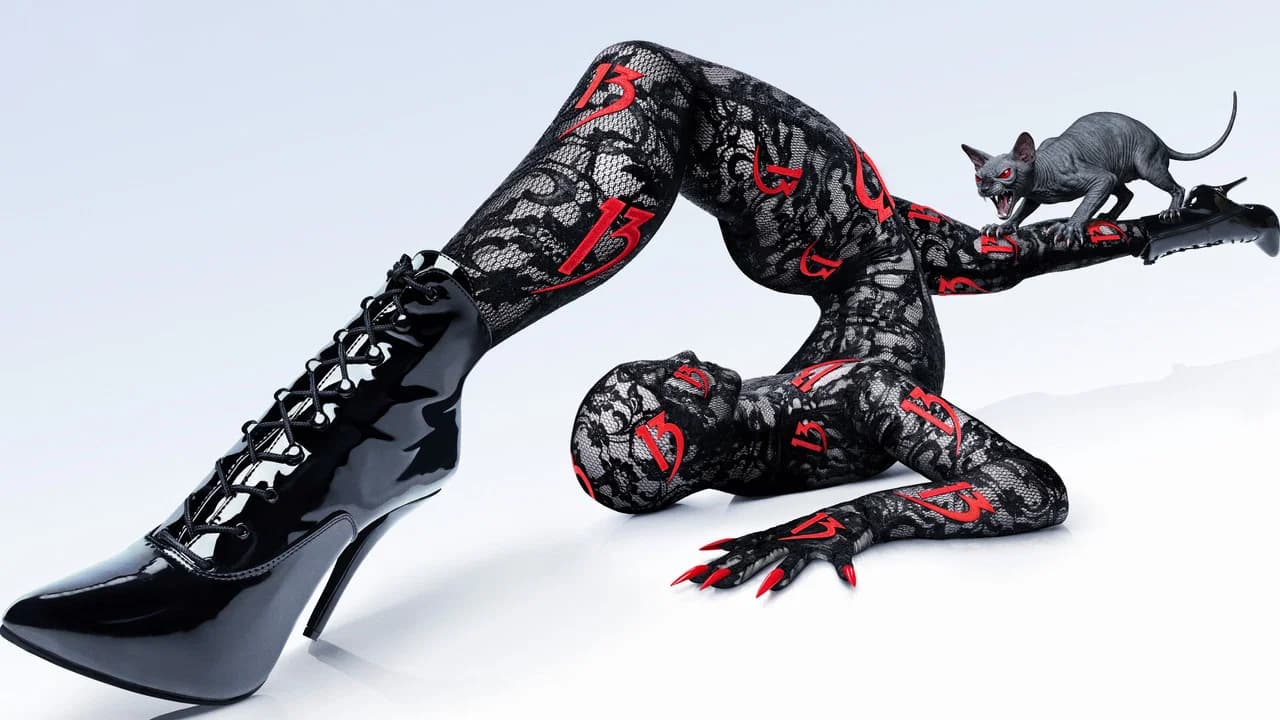
American Horror Story
Can Karayel • October 1, 2026
Summarize this with AI
Rating
Created by Ryan Murphy and Brad Falchuk, American Horror Story has left its mark on television history with its anthology structure that establishes a new horror universe each season. The series, in which actors like Sarah Paulson and Evan Peters portray different characters from season to season, masterfully blends gothic aesthetics with social commentary.
Premiering on FX in 2011, American Horror Story emerges as a groundbreaking production that redefined the television horror genre. This anthology series created by Ryan Murphy and Brad Falchuk adopts a radical approach to television storytelling by presenting a completely different story, setting, and cast of characters each season. Traversing a wide spectrum of horror across thirteen seasons—from haunted houses to insane asylums, witch covens to apocalyptic scenarios—the series pushes the boundaries of the genre while also holding a sharp lens to social issues.
Perhaps the most revolutionary aspect of American Horror Story is its embrace of the anthology format. While each season tells an independent story, Murphy and Falchuk repeatedly use the same ensemble cast in different roles. Sarah Paulson appears as a nun in one season, a medium in another, and a cult leader in yet another. This structure creates a tremendous platform for showcasing the actors' talents. Evan Peters's transformation from season to season is proof of just how versatile an actor can be. As we watch Peters navigate between characters—an obsessed young man in a haunted house, a crazed serial killer in an asylum, a lobotomized freak show performer—we witness him giving an acting masterclass.
The show's visual language stands out as a contemporary interpretation of gothic aesthetics. Each season has its own distinct color palette and atmosphere. The Victorian gloom-filled spaces of Murder House, the cold clinical white of Asylum, the New Orleans mysticism of Coven, the art deco extravagance of Hotel—each creates a different visual world. With the contributions of cinematographer Michael Goi, American Horror Story is one of the examples proving that television productions can reach cinematic quality. Long tracking shots, asymmetric framing, and shadow play turn every scene into a visual feast.
American Horror Story doesn't settle for superficial horror elements; each season also draws attention with its underlying social critiques. The Asylum season examines 1960s American society's attitudes toward mental illness, sexuality, and authority. Coven explores female solidarity and intergenerational conflict, Cult examines post-Trump American polarization, and 1984 scrutinizes Reagan-era conservatism. This layered narrative makes the series worth watching not only for horror genre fans but also for viewers sensitive to social issues.
In terms of cast, American Horror Story is a true treasure trove of talent. Jessica Lange's iconic performances in the first four seasons, especially her witch matriarch role in Coven, created one of the most powerful female characters in television history. Kathy Bates's bearded lady performance in Freak Show, Angela Bassett's vampire queen interpretation in Hotel, Emma Roberts's young witch portrayal—each is Emmy-worthy work. Sarah Paulson stands out as the true heart of the series; while she transforms into a different personality each season, the emotional connection she establishes with the audience continues unbroken.
In terms of music and sound design, American Horror Story blends classical and contemporary approaches in building its horror atmosphere. Composer Mac Quayle's minimalist yet effective scores strengthen the series' tension-filled moments. Additionally, each season's opening credits, designed by César Santos and Kyle Cooper, have become one of the most iconic title sequences in television history. Those disturbing images and nerve-wracking music immediately draw the viewer into the show's dark world.
Behind-the-scenes information makes American Horror Story's creative process even more interesting. Ryan Murphy's idea of dedicating each season of the series to different horror subgenres was initially considered too risky by studio executives. However, the first season's success proved that the anthology format could be adapted for television. Among the actors, Sarah Paulson earned the title of the series' most frequently appearing performer by portraying eleven different characters across eight different seasons. An interesting detail: clues are hidden in each season's opening credits based on the number of characters who die that season.
The series' impact on popular culture is undeniable. Television horror series need to be divided into pre- and post-American Horror Story eras. Anthology series that came later, such as The Haunting of Hill House and Castle Rock, followed the path opened by Murphy and Falchuk. The series, which has also created a cult following among young audiences in Turkey, reached wider audiences through its availability on Netflix.
While some seasons of American Horror Story are stronger than others, the series' overall success lies in its consistency. Exploring different facets of the horror genre over thirteen seasons, telling a new story each time, and never compromising on visual quality is no small achievement. Of course, some seasons can go overboard and turn into self-parody, but this boldness is part of the show's DNA. American Horror Story offers an indispensable experience for viewers who enjoy being scared, appreciate visual spectacle, and value subtext-rich narratives. Exploring this horror universe that Ryan Murphy created with cinematic and television language means witnessing the potential of contemporary television storytelling.
Frequently Asked Questions
Is American Horror Story an anthology series?
Yes, American Horror Story is an anthology series created by Ryan Murphy and Brad Falchuk. Each season tells a completely different horror story with new characters, settings, and themes, though some actors return in different roles across seasons.
Who created American Horror Story?
American Horror Story was created by Ryan Murphy and Brad Falchuk in 2011. The series revolutionized television with its anthology format, presenting a fresh horror narrative each season.
Is American Horror Story worth watching?
With a FoxFilm score of 8.3/10, American Horror Story is definitely worth watching for horror fans. The series broke new ground in television with its innovative anthology structure and consistently strong performances.
When did American Horror Story first premiere?
American Horror Story first premiered in 2011 on FX. The series has since become one of the most successful horror franchises on television, spanning multiple seasons with different storylines.