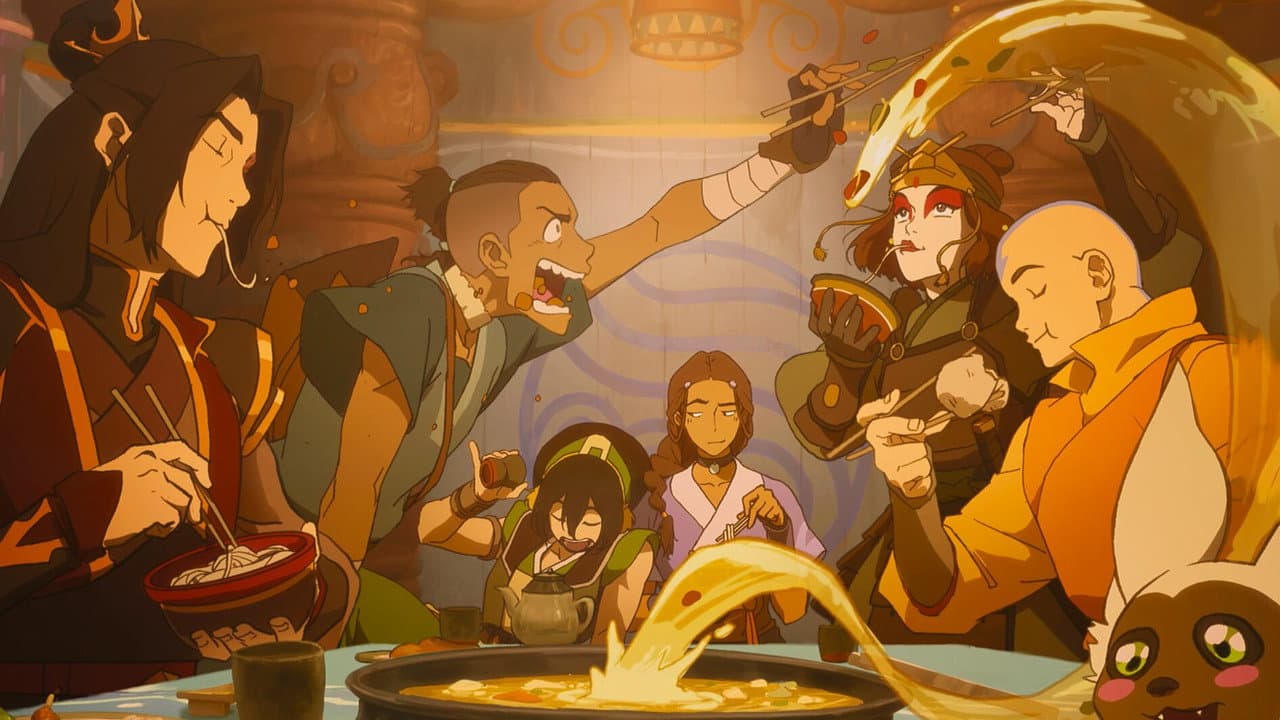
Avatar Aang: The Last Airbender
Can Karayel • August 3, 2026
Summarize this with AI
Rating
Lauren Montgomery's Avatar Aang: The Last Airbender achieves an elegant transition of the legendary animated series to the big screen. Deeply exploring themes of cultural identity and extinction, the film offers an experience filled with both nostalgia and innovation.
Twenty years after Avatar: The Last Airbender took the television world by storm in 2005, Avatar Aang: The Last Airbender, brought to the big screen under Lauren Montgomery's direction, presents one of the finest examples of maturity that animated cinema can achieve. The film not only stokes feelings of nostalgia but also addresses universal themes such as cultural identity, extinction, and hope in a contemporary language.
The rich mythology and philosophical depth drawn from East Asian culture that formed the foundation of the original series' success appears in all its grandeur in this cinematic adaptation. The story follows Avatar Aang, who can control the four elements by bending them, on his quest to find an ancient power that could prevent the complete erasure of his own culture. However, this seemingly simple premise transforms into a multi-layered narrative in Lauren Montgomery's masterful hands. The film is not merely an adventure story but also a profound meditation on the preservation of cultural memory, identity crises, and the healing of collective trauma.
The screenplay has a structure shaped under the consultation of the original series' creators, Michael Dante DiMartino and Bryan Konietzko. However, Montgomery's experience on productions like Young Justice and Voltron: Legendary Defender brings a mature and cinematic breath to the narrative. Not a single scene is wasted during the 99-minute runtime; we trace a visual language laden with meaning in every frame. Particularly, Aang's entrapment between his own heritage and the demands of the modern world reflects a tension that Turkish audiences will find intimately familiar.
Eric Nam's voicing of Aang stands out as one of the film's boldest decisions. Coming from the K-pop world, Nam succeeds in carrying both the character's childlike innocence and the weight of leadership responsibility in his voice. Dave Bautista's portrayal of an experienced warrior adds physical gravitas to the film's action sequences. Jessica Matten's authentic energy, stemming from her Native American roots, provides natural depth to her character. Steven Yeun's contribution cannot be overlooked either; following his performances in The Walking Dead and Invincible, he manages to voice a wide spectrum of emotions in this project as well.
Avatar Aang: The Last Airbender, which showcases the pinnacle of what animated cinema has achieved technically, adopts a hybrid approach that merges traditional 2D aesthetics with 3D technology. The visual language, brought to life with production support from Studio Mir, draws from a broad cultural palette ranging from Japanese anime tradition to Chinese ink paintings. Fight scenes are designed with choreography inspired by traditional Chinese martial arts; each element speaks its own unique movement language for the bender characters. The fluid tai chi movements of waterbenders, the aggressive kung fu stances of firebenders—each offers a visual feast.
The music is designed with an approach inspired by Jeremy Zuckerman's iconic work on the original series. The blending of traditional Asian instruments with orchestral elements perfectly supports the film's emotional tone. Particularly in scenes where Aang confronts his past, instruments like the pipa and erhu serve as a bridge transporting the viewer into the character's inner world.
There are also interesting details behind the scenes of the film. Lauren Montgomery worked closely with cultural consultants during production to ensure accurate representation of each element. Consultations were held with Tibetan Buddhism experts for the spiritual structure of the Air Nomads, and art pieces from the Tang Dynasty period were referenced for architectural designs. The film's animation team spent three months developing just the walking and fighting movements for each character.
Avatar Aang: The Last Airbender transcends being merely an animated film to become a work of art that touches on urgent issues of today's world such as cultural assimilation and loss of identity. While reminding younger generations of their own roots, the film succeeds in speaking a universal language. This search for cultural belonging, which Turkish viewers will also find familiar, elevates the film to universal success.
In conclusion, Lauren Montgomery's Avatar Aang: The Last Airbender is one of those rare productions that both satisfies old fans and opens its doors wide to new viewers. Its 9.361 rating on TMDB is proof of the maturity the film has achieved. This is not just an adaptation but a cinematic masterpiece that preserves the spirit of the original work while elevating it to a new dimension.
Frequently Asked Questions
Is Avatar Aang: Son Havabukucu based on the animated series?
Yes, Avatar Aang: Son Havabukucu (The Last Airbender) is a live-action film adaptation of the legendary animated series, directed by Lauren Montgomery and released in 2026. The film brings the beloved characters and story to the big screen while exploring deeper themes of cultural identity and extinction.
Who directed Avatar Aang: Son Havabukucu?
Avatar Aang: Son Havabukucu was directed by Lauren Montgomery, who successfully transitioned the animated series into a cinematic experience. The film was released in 2026 and received critical acclaim for its elegant adaptation.
Is Avatar Aang: Son Havabukucu worth watching?
With an impressive FoxFilm score of 9.2/10, Avatar Aang: Son Havabukucu is definitely worth watching, as it achieves an elegant transition of the beloved animated series while deeply exploring meaningful themes of cultural identity and extinction.
Is Avatar Aang: Son Havabukucu getting a sequel?
There has been no official announcement yet about a sequel to Avatar Aang: Son Havabukucu. Given the film's high FoxFilm score of 9.2/10 and the source material's rich storyline, a sequel remains possible but unconfirmed as of now.