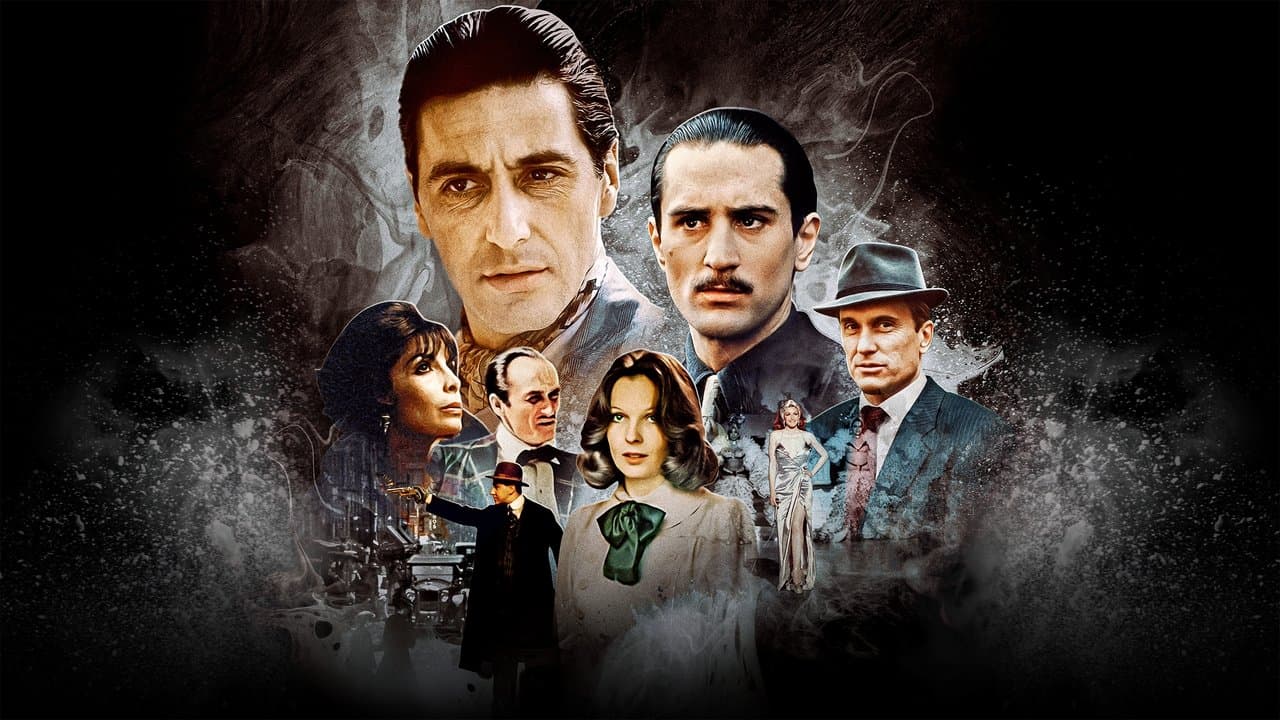
The Godfather Part II
Can Karayel • June 15, 2026
Summarize this with AI
Rating
Francis Ford Coppola's The Godfather Part II, one of the greatest achievements in cinema history, is proof that a sequel can be better than the original work. Masterfully weaving together the parallel stories of two generations, this masterpiece deeply examines power, family, and the dark side of the American dream, reaching the pinnacle of cinematic art in every frame.
Francis Ford Coppola's The Godfather Part II stands as one of cinema's greatest achievements — proof not merely that a sequel can match its predecessor, but that it can surpass it entirely. Released in 1974, the film interweaves two parallel stories: Michael Corleone's ruthless consolidation of power in the 1950s, and young Vito Corleone's rise from a Sicilian orphan to a criminal patriarch in early 20th-century New York. This dual narrative transforms the film from a gangster saga into a profound meditation on power, family, loyalty, and the darkest side of the American dream.
Two Generations, One Tragedy
Coppola's boldest decision was weaving two timelines into a single coherent film. Scenes of young Vito quietly gathering strength against the tyrannical Don Fanucci alternate with Michael's battles against Senate investigations and family betrayals. The two stories complete and condemn each other: Vito built his empire for his family; Michael destroys his family to preserve his empire. Coppola makes this devastating irony felt not through dialogue but through pure cinematic language.
A Summit of Screen Performance
Robert De Niro's Oscar-winning portrayal of young Vito set a new benchmark for screen acting — paying homage to Brando's iconic original while creating something entirely his own. Every glance carries Vito's cunning; every silence conceals latent violence. Al Pacino's Michael is far darker than in the first film: no longer protecting his family, but sacrificing it for power. The glacial stillness in his eyes signals the real-time loss of his soul. Diane Keaton and John Cazale provide emotional anchors with unforgettable supporting performances.
Gordon Willis's Dark Poetry
Cinematographer Gordon Willis, nicknamed 'The Prince of Darkness,' takes the shadowy aesthetic of the first film to its apex. Michael's scenes are engulfed in ever-deepening shadow — the more power he gains, the less light remains. The Sicilian and early New York sequences, bathed in warm gold, radiate nostalgic hope. This visual contrast encapsulates the film's thematic core in a single frame: Vito's world was born of hope; Michael's world is slowly going dark.
A Score That Speaks What Characters Cannot
Nino Rota's elegiac waltz from the first film returns, heavier and more melancholic than ever, while Carmine Coppola's new themes carry the warmth of Sicily into Vito's story. The music is never mere background — it voices every emotion the characters cannot express. The final scene's marriage of image and music is one of cinema's most devastating emotional crescendos.
The Dark Side of the American Dream
Beyond a gangster film, The Godfather Part II is one of cinema's most merciless critiques of the American dream. Vito's arc follows the classic immigrant story — rising from nothing through cunning and will. But Coppola shows the cost of that rise through Michael: which values were trampled, which bonds were broken. Power, loyalty, family, and honor collide throughout, and each emerges damaged by the end.
Legacy Carved in Film History
The Godfather Part II won six Academy Awards including Best Picture, Best Director, Best Adapted Screenplay, and Best Supporting Actor for De Niro. It perennially ranks among the top three films ever made in American Film Institute polls. That legacy is no accident — it is the product of every element working in perfect unity: story, direction, performance, cinematography, and music. Coppola did not simply make a sequel; he created an enduring masterpiece.
Frequently Asked Questions
Is Baba II better than the first Baba movie?
Many critics and audiences consider Baba II to be superior to the original, with Francis Ford Coppola masterfully weaving parallel storylines. It's widely regarded as one of the rare sequels that surpasses its predecessor and stands as one of the greatest achievements in cinema history.
What year was Baba II released?
Baba II was released in 1974, directed by Francis Ford Coppola. It came two years after the original film's groundbreaking success.
Is Baba II worth watching?
Absolutely, with a perfect FoxFilm Score of 10.0/10, Baba II is considered one of the greatest achievements in cinema history. The film masterfully weaves together parallel storylines and is proof that a sequel can surpass the original.
Did Baba II win any Academy Awards?
While specific award details aren't provided in the available information, Baba II is widely recognized as one of cinema's greatest achievements and received critical acclaim upon its 1974 release. The film's perfect rating reflects its enduring legacy in film history.