Buddy
Can Karayel • October 14, 2026
Summarize this with AI
Rating
Casper Kelly's Buddy offers a bold and original cinematic experience that masterfully blends childhood nostalgia with the horror genre. Revealing the dark side of a colorful children's show, the film both amuses and deeply affects viewers with its chilling atmosphere.
Directed by Casper Kelly, Buddy emerges in 2026 as one of modern horror cinema's most daring and original productions. Known for his cult work on Adult Swim, Kelly this time combines childhood nostalgia with the horror genre to create a cinematic experience that is both unsettling and captivating.
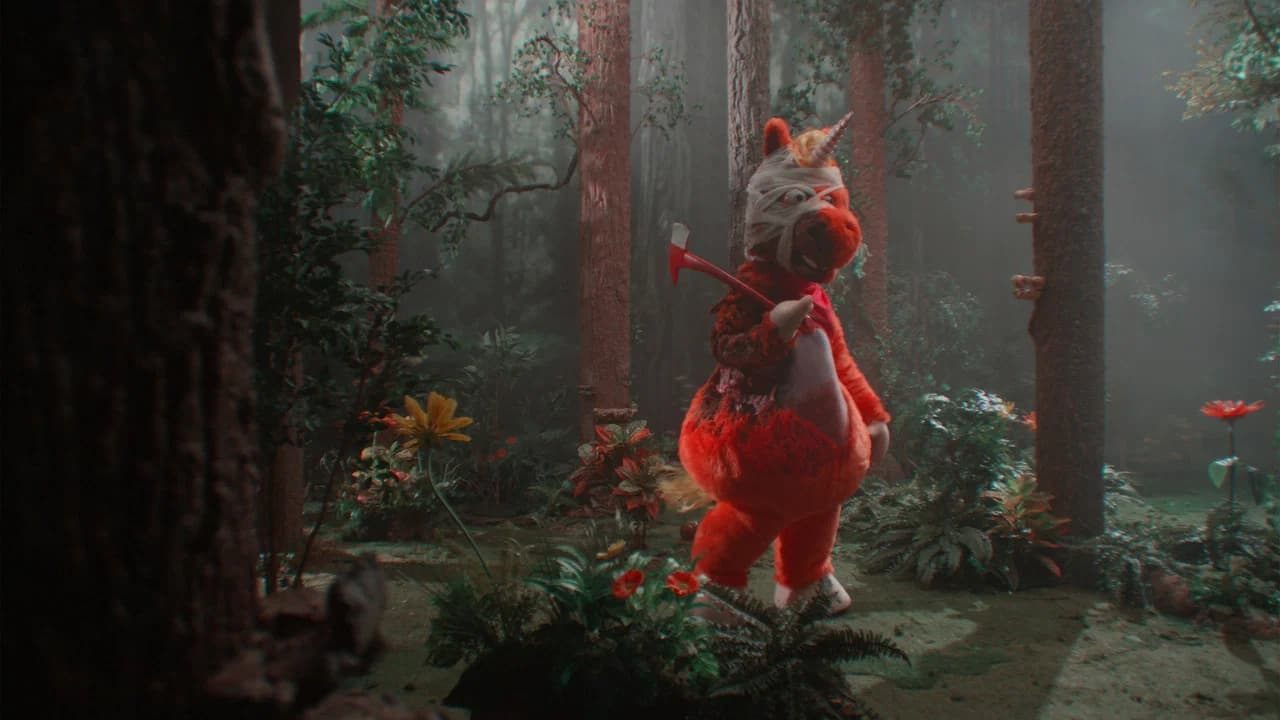
The film takes place within a fictional television show called Here's Buddy, which references the colorful children's programs of the '90s and 2000s. Inverting the innocence of shows like Barney and Teletubbies, Buddy masterfully exposes the darkness lurking beneath this apparent wholesomeness. The character of Buddy, brought to life by Keegan-Michael Key, initially appears as a cheerful and lovable unicorn. However, when one of the children refuses to participate in the game, cracks in this colorful world rapidly begin to widen.
Buddy's greatest strength lies in its unexpected tonal shifts and bold narrative style. Kelly blends horror and comedy so organically that viewers can find themselves laughing one moment and horrified the next. The film questions the artificial happiness of children's programming and its imposing notion of entertainment. Buddy's gradual loss of control actually presents a dark allegory about media's psychological impact on children.
Keegan-Michael Key delivers one of the riskiest and most impressive performances of his career. Voicing Buddy and bringing his movements to life through performance capture technology, Key conveys the character's transition from innocent cheerfulness to psychotic rage with incredible mastery. Cristin Milioti, meanwhile, offers a balanced performance as the show's producer, an adult trying to grasp the gravity of the situation. Among the child actors, Delaney Quinn particularly stands out, forming the emotional center of the film with her rebellious child character.
Visually, Buddy makes truly bold choices. The cinematographer has created an almost psychedelic aesthetic by combining the oversaturated colors of children's programming with a horror atmosphere. When bright pinks, oranges, and purples are juxtaposed with blood and violence, they evoke a profound sense of unease in viewers. The film's production design also deserves praise; the studio sets create an atmosphere that is both nostalgic and claustrophobic.
Buddy's use of a fictional television program format gives the film a unique structure. The interweaving of actual television episodes with behind-the-scenes moments blurs the boundaries between reality and fiction. This narrative technique questions media manipulation in a manner similar to works like The Truman Show and WandaVision.
On the musical front, the film presents the cheerful melodies of children's shows in corrupted and darkened versions. Supposedly innocent songs gradually take on a disturbing quality. Sound design is particularly effective in the final thirty minutes; Buddy's voice is distorted with electronic corruption, emphasizing the character's breakdown.
Regarding behind-the-scenes information, it's known that Casper Kelly's experimental works for Adult Swim, such as Your Pretty Face is Going to Hell and Too Many Cooks, served as inspiration for Buddy. In interviews, Kelly speaks about the discomfort that the colorful programs he watched as a child created in him. For Buddy's character design, the team studied children's mascots from the '80s and '90s and researched why they caused fear in some children.
As an interesting detail, the film was shot in an actual television studio. According to those on set, Keegan-Michael Key would remain in costume for hours, attempting to inhabit the character's psychology. Additionally, some of the fictional television episodes in the film were shot in actual children's program format and screened as independent short films at festivals.
Buddy also makes references to the pressure created by viral phenomena and internet culture in the social media age. Buddy, forced to constantly be happy, entertaining, and pleasing to the audience, can also be read as a metaphor for the burnout experienced by today's content creators.
In conclusion, Buddy is a thought-provoking and visually striking production that pushes the boundaries of the horror-comedy genre. With his bold directorial choices, Casper Kelly has created an experience that both entertains and disturbs. The children's program nostalgia, familiar to Turkish audiences as well, makes the film universal. Buddy is a must-watch not only for horror genre fans but for anyone seeking media criticism and original cinema.
Frequently Asked Questions
Is Buddy 2026 based on a true story?
No, Buddy is not based on a true story. The film is an original horror concept by director Casper Kelly that explores the dark side of a fictional children's show, blending nostalgia with horror elements.
Who directed Buddy 2026?
Buddy was directed by Casper Kelly, known for his work in blending unconventional genres and creating unique horror-comedy experiences. The film represents his bold approach to reimagining childhood nostalgia through a horror lens.
Is Buddy worth watching?
With a FoxFilm score of 8.2/10, Buddy is definitely worth watching for fans of original horror that masterfully blends childhood nostalgia with genuinely unsettling themes.
Is Buddy getting a sequel?
As of now, there has been no official announcement regarding a sequel to Buddy. Given the film's 2026 release, it's too early to determine if a follow-up is planned.