The Law of Beasts
Can Karayel • November 26, 2026 • Written with AI assistance
The Law of Beasts: plot in brief
The Law of Beasts is set in Poland, where panic grows as the release of a convicted child killer draws near. At its center is a moral conflict between the case investigator and a psychiatrist over law, public safety and the human mind.
Summarize this with AI
Want to see more FoxFilm reviews in your Google results? Add us as a preferred source.
Add FoxFilm as a preferred source on GoogleRating
Canavar Yasası (Prawo bestii), Netflix's Polish crime drama, raises questions of justice, fear, and conscience around the release of a child killer. Starring Agnieszka Grochowska and Andrzej Chyra, the series is a strong candidate to enter the conversation as one of the best crime series available on Netflix.
Some stories are written in a society's conscience long before they need a television screen. Canavar Yasası (Prawo bestii), known in English as The Law of the Beast, draws on exactly this kind of vein. In Poland's public memory there is a piece of legislation, passed for serious offenders and popularly called the "beast law." It brought to the national agenda the question of what should happen to people who have completed their sentences but are still considered dangerous. This 2026 Netflix crime drama reopens that debate within a fictional framework. For our viewers it is a familiar anxiety, because in Turkey, too, every time crimes against children and sentence-execution rules come up, society is wounded in the same place.
Story and Screenplay
The series' starting point is strong and clear: a convicted child killer is about to be released, and panic is growing across Poland. The real engine of the narrative, however, is the moral conflict between the case's investigator and its psychiatrist. One is the voice of the law and public safety, the other a scientist who defends the complexity of the human mind. This pair does not push the viewer toward an easy side. The title Canavar Yasası (Prawo bestii) is itself a summary of a question: the moment we call a human being a monster, where does the rule of law stand? The screenplay's greatest strength is that it tries to ask this question through its characters' personal costs, without turning it into a didactic sermon. On the downside, the familiar patterns of crime series make themselves felt from time to time. The media pressure, the angry neighborhood, and the opportunism of politics all appear right where we expect them. Even so, the series does not use these elements as window dressing; it makes them serve the main conflict.
Direction and Cinematography
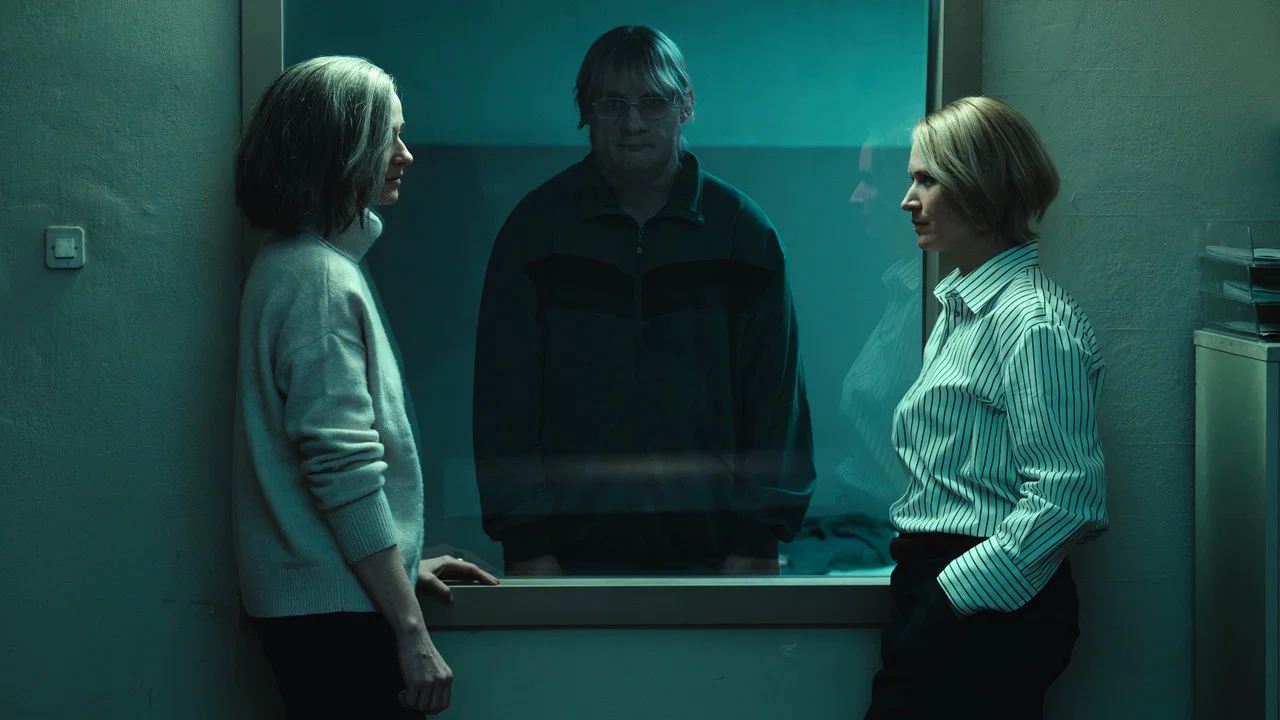
The information we have about the production's creative team is limited, so rather than passing firm judgments on the direction, it is more honest to assess the choices on screen. The cold, grayish, wintry aesthetic of Polish crime storytelling is almost a signature in series like this. Canavar Yasası follows this line: enclosed spaces, low-contrast lighting, and framing that moves in close on faces. This choice suits the weight of the subject. The series is less interested in showing violence than in making visible the fear and suspicion it leaves behind. The tension on the street is balanced by the quiet conflict in meeting rooms. The visual language offers no striking innovation, but it stays respectful and measured toward its subject. Not presenting crimes against children with a sensational aesthetic is, in my opinion, one of the series' most right decisions.
Performances
The weight of the cast comes from well-known names in Polish cinema and theater. Agnieszka Grochowska, with her controlled, introspective acting, is a reassuring presence in moral thrillers of this kind. Agnieszka Żulewska brings a lively energy to the scenes. Andrzej Chyra, an actor who has spent years in Polish cinema playing characters who swing between authority and ambiguity, adds tension and depth to his scenes here. Michał Pawlik, Kamilla Baar, and Michalina Łabacz also strengthen the story's social foundation in supporting roles. The best moments come in scenes where the actors say nothing and the disagreement grows through glances. The weak side is that some secondary characters are not developed in enough depth.
Technical Details
On the music side, the series leans on atmosphere rather than melody. Low-frequency synthesizers, sparse accents, and a sound design that works with silence feed the unease that grows as the release date approaches. The editing favors parallel storytelling: on one side the public panic, on the other the personal struggle inside the case file. This rhythm keeps the tension of the first season alive, though the pace can dip slightly in the middle episodes. The familiar production standard of Netflix's European productions applies here too: clean visuals, consistent sound, and a balanced pace.
Behind the Scenes and Fun Facts
First, the beast law concept that gives the series its name is associated in real life with the regulation that came into force in Poland in 2014, which allows people considered dangerous after release to be held in a closed treatment center. This regulation came onto the agenda ahead of the release of a much-discussed child killer in the country. Second, the law also resonated in European human rights debates; the question of under what conditions the freedom of someone who has completed their sentence may be restricted divided legal scholars. Third, the series' place in Netflix's catalog coincides with a period in which Polish productions are becoming increasingly visible on the platform. For this reason, Canavar Yasası presents itself not merely as a local matter but as a European series that international audiences are following as well. The series' TMDB score of around 6.6 also suggests that viewers respect it but do not feel great admiration for it.
Conclusion and Cultural Impact
Canavar Yasası (Prawo bestii) may not be a flawless masterpiece, but it stands out because it puts a bold question on the table. Where anger is justified, is it possible to preserve the composure of justice? The series gives no easy answer to this question; it makes the viewer think by making them uncomfortable. Among the crime series to watch on Netflix in Turkey, it is a strong option for fans of Scandinavian and Polish productions. Moving along the axis of law, conscience, and social fear, this series is one I recommend especially to those who like dramas that are open to debate. For the viewer who keeps expectations realistic, it is a satisfying first season.
Frequently Asked Questions
What is The Law of Beasts about?
The Law of Beasts (Prawo bestii) is a 2026 Polish crime drama in which a convicted child killer is about to be released and panic spreads across Poland. The story centers on the moral conflict between the case's investigator, who speaks for the law and public safety, and its psychiatrist, who defends the complexity of the human mind. It is set within the debate over Poland's so-called "beast law."
What genre is The Law of Beasts?
The Law of Beasts is a Crime and Drama series. It combines an investigation storyline with a moral and psychological conflict over justice and conscience.
Who stars in The Law of Beasts?
The series stars Agnieszka Grochowska and Andrzej Chyra.
What language is The Law of Beasts in?
The Law of Beasts was originally made in Polish.
How many seasons and episodes does The Law of Beasts have?
The Law of Beasts ran for 1 season and 4 episodes.
Where can I watch The Law of Beasts?
In Turkey, The Law of Beasts is available on Netflix.