Collision Course
Can Karayel • November 21, 2026 • Written with AI assistance
Collision Course: plot in brief
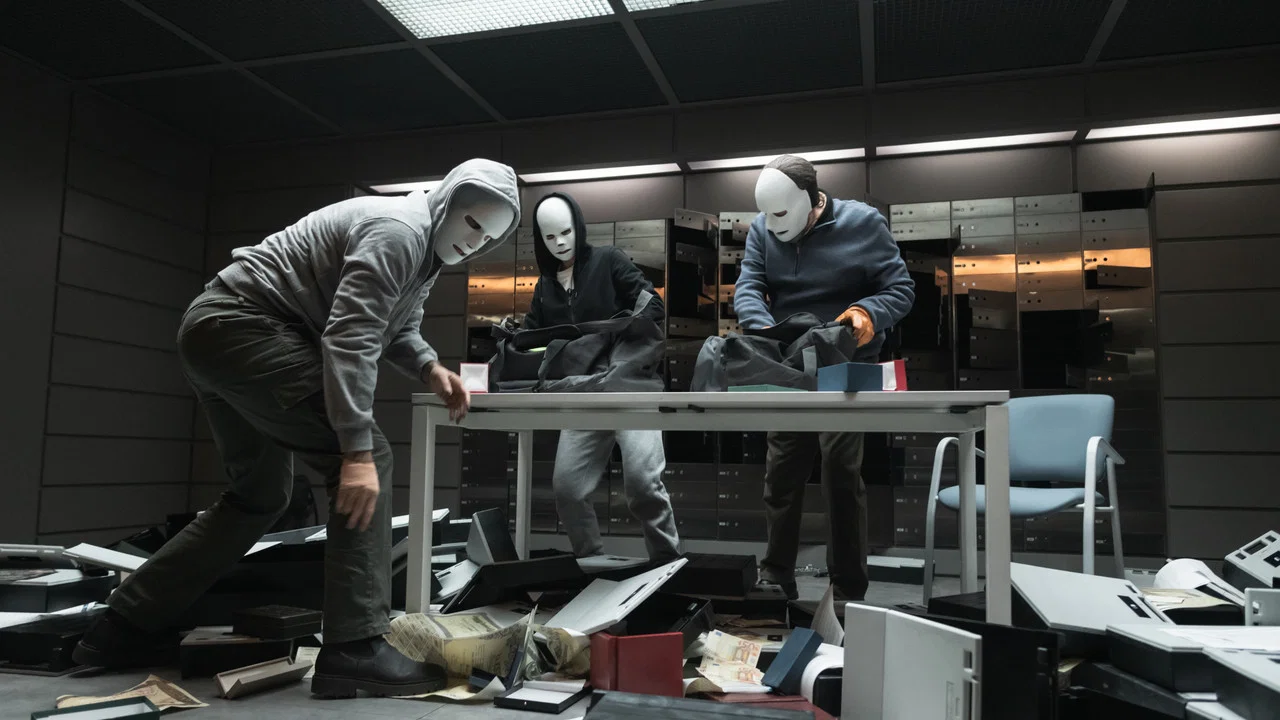
Çarpışma Anı begins when a group of robbers enters a bank in Madrid. After the first few minutes, however, the event moves beyond a planned robbery and evolves into a game of deception and survival that spirals out of control.
Summarize this with AI
Want to see more FoxFilm reviews in your Google results? Add us as a preferred source.
Add FoxFilm as a preferred source on GoogleRating
Çarpışma Anı (Colisión), directed by Daniel Sánchez Arévalo, is a thriller drama that turns a bank robbery in Madrid into a game of moral survival under the shadow of an economic crisis. Starring Laia Costa, Karra Elejalde and Luis Zahera, the film tries to rebuild the conventions of the heist movie within a human frame.
The heist film is one of cinema's oldest and most durable genres. The line that runs from Sidney Lumet's Dog Day Afternoon to La Casa de Papel, which also reached huge audiences in Turkey, asks the same question in different forms: when the system is this unjust, is the person who robs it really guilty? Çarpışma Anı (Colisión) carries that question into the atmosphere of Madrid's economic crisis. In the director's chair is Daniel Sánchez Arévalo, a filmmaker who has always been drawn to human relationships and social fractures. That makes the film less a pure adrenaline machine than a laboratory for characters under pressure.
Story and Screenplay
Çarpışma Anı begins when a group of robbers enters a bank in Madrid. After the first few minutes, however, the event moves beyond a planned robbery and evolves into a game of deception and survival that spirals out of control. The collision in the film's title doesn't refer only to a physical accident. It is also a point of intersection where plans, lies, class positions and consciences tangle together. The most interesting aspect of the screenplay is that everyone fears not only going to prison but also having their own past and secrets exposed. The tension comes less from guns than from a lack of information. The questions of who is deceiving whom and who is making decisions on whose behalf keep the viewer constantly on alert.
It must also be admitted that we are on familiar ground here. Hostage dynamics and twists of betrayal are the genre's usual tools. The film's value lies less in how freshly it uses these tools than in how it grounds them in the emotional terrain of economic hopelessness. For Turkish viewers, this terrain is familiar. The sense of debt, unemployment and insecurity that followed the 2001 crisis makes the desperation running through the characters' every move easy to understand.
Direction and Cinematography
Sánchez Arévalo is known for character-driven work such as Azuloscurocasinegro and Gordos, and that background is clearly felt in Çarpışma Anı. The camera prefers to move in on faces, glances and quiet hesitations rather than show the action. A closed space like a bank naturally calls for a claustrophobic visual language. Tight framing, shots composed through doorways, and the cold, fluorescent tone of the lighting turn the space from a safe public area into a trap. Madrid's exteriors, meanwhile, reflect the crisis seeping out onto the streets, in a portrait of a tired, tense city.
Performances
The film's greatest strength is its strong Spanish cast. Laia Costa drew international attention with Victoria, which was shot in a single take. Here, too, she brings a controlled, inward intensity. Karra Elejalde became known to a wide audience through comedies like Ocho apellidos vascos, but his real strength is his ability to show the fragility beneath the humor. Luis Zahera won a Goya for his performance in As bestas, and he remains very impressive in roles that swing between menace and desperation. Tamar Novas and Álvaro Cervantes represent the younger generation, while Lluís Homar adds the authoritative, enigmatic weight he brings from Almodóvar's cinema. The ensemble's chemistry makes even the screenplay's clichéd moments believable.
Technical Details
Editing is the most important element in setting the rhythm of a thriller, and Çarpışma Anı takes a balanced approach here. At 122 minutes, the running time is slightly beyond the genre's usual limits. The pace sags at times in the middle section. On the other hand, as the pieces of information fall into place toward the finale, the film recovers in a way that rewards the viewer. The music avoids exaggerated emphasis. A low-frequency sound design that keeps the tension constantly taut stands out. The scenes in which silence is used like music are the film's most effective moments. Still, its musical identity stays more in the background when compared with the genre's unforgettable examples.
Behind the Scenes and Fun Facts
Because the details that have reached the public about the film's production are limited, it is worth recalling a few interesting points from the cast's careers. Victoria, which introduced Laia Costa to the world, was shot in Berlin in a single uninterrupted take lasting about two hours. This experience explains Costa's command of long, intense scenes. Luis Zahera won the Goya for Best Supporting Actor for his role in As bestas, proving himself one of the most dependable character actors in Spanish cinema. Lluís Homar, meanwhile, is familiar to international cinephiles from his role in Almodóvar's Los abrazos rotos. Another interesting point is that Spanish cinema has been on the rise in the thriller and crime genres in recent years. The great success of La Casa de Papel in Turkey has noticeably increased interest in Spanish-language productions. Çarpışma Anı is a film that can feed on that interest.
Conclusion and Cultural Impact
Even if Çarpışma Anı is not one of the genre's groundbreaking examples, it is a respectable attempt to turn the heist film into a mirror of social anxiety. Its score of around 6.3 on TMDB sums up the film's character well: above average, but not something that thrills everyone. Strong performances and atmospheric direction hold up a screenplay that sometimes remains predictable. For Turkish viewers who grew up with Netflix and digital platform culture, this story about how a crisis corners people speaks from a familiar place. For lovers of thrillers, dramas and crime stories, and especially for those interested in Spanish cinema, it is a balanced, humane film worth watching.
Frequently Asked Questions
What is Collision Course about?
Collision Course (Çarpışma Anı / Colisión) follows a group of robbers who enter a bank in Madrid during an economic crisis. What begins as a planned robbery turns into a game of deception and survival that spirals out of control. Everyone fears both prison and having their own past and secrets exposed.
What genre is Collision Course?
Collision Course is a Thriller, Drama and Crime film. It reworks the conventions of the heist movie as a game of moral survival.
Who stars in Collision Course?
Collision Course stars Laia Costa, Karra Elejalde and Luis Zahera. It is directed by Daniel Sánchez Arévalo.
What language is Collision Course in?
Collision Course was originally made in Spanish.
How long is Collision Course?
Collision Course runs 2 h 2 min (122 minutes).
Where can I watch Collision Course?
In Turkey, Collision Course is available on Netflix.