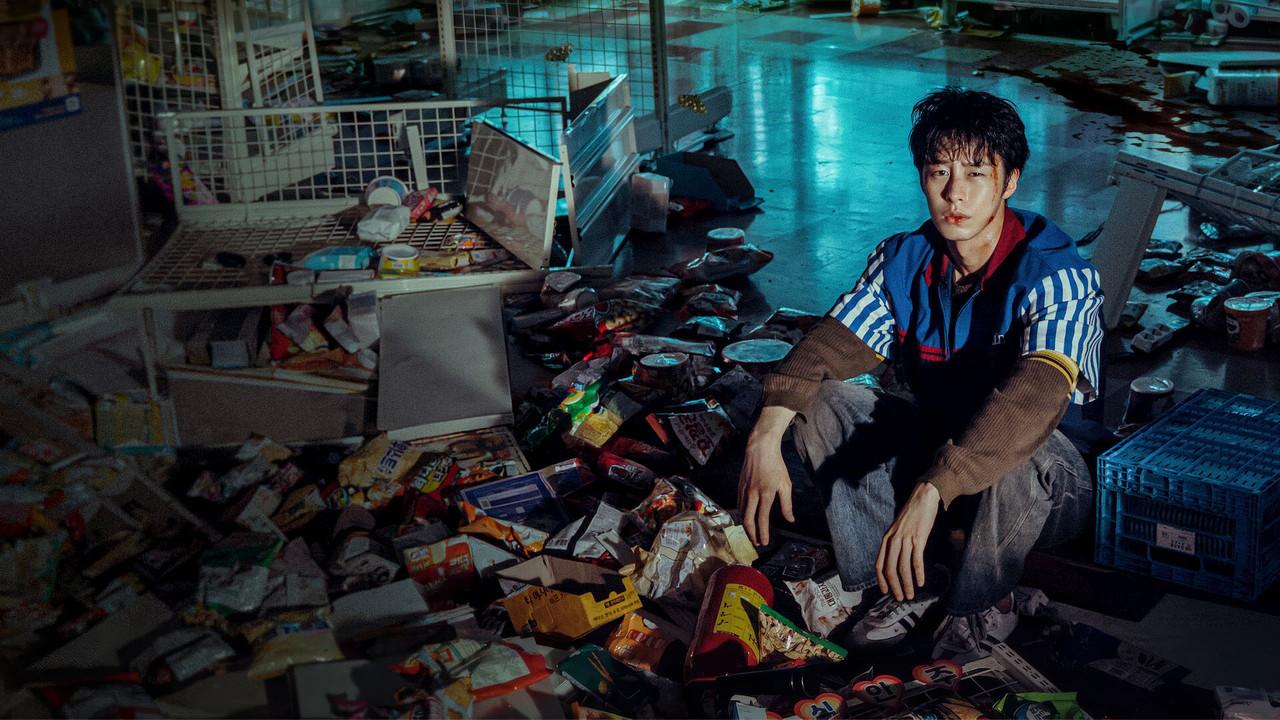
Dead-End Job
Can Karayel • November 24, 2026 • Written with AI assistance
Dead-End Job: plot in brief
Dead-End Job follows a young man drowning in debt who accepts an irresistibly attractive part-time job offer. A mysterious agency gives him one well-paid assignment after another, but each grows stranger and more dangerous, pitting him against ghosts and fear.
Summarize this with AI
Want to see more FoxFilm reviews in your Google results? Add us as a preferred source.
Add FoxFilm as a preferred source on GoogleRating
Dead-End Job, a Netflix Korean series from Han Jun-hee, puts debt, ghosts and dark humor at the same table. The mystery drama stars Lee Jae-wook and Go Min-si and is a strong contender for one of the most notable Korean series of 2026.
Some series are born not from big questions but from a small job listing. Dead-End Job confronts us with exactly that kind of premise: a young man drowning in debt can't say no to an irresistibly attractive part-time job offer. Sound familiar? In Turkey, too, everyone has a relative or a friend, or has been that person themselves, who at some point went looking for extra work under the shadow of a credit card statement. The series, created by Han Jun-hee, turns this very universal anxiety into a supernatural horror tale and carves out a distinctive place for itself among Netflix's Korean productions.
The series' original title comes from a Korean slang expression meaning an easy, lucrative part-time job. The title is an irony in itself, because the sweet earnings it promises turn into a poisonous trap as the story unfolds. The Turkish idiom "bal gibi iş" (literally "a job like honey," meaning a cushy, too-good-to-be-true gig) comes to mind right away, and this resemblance makes the series feel even closer to Turkish viewers.
Story and Script Analysis
Dead-End Job builds its plot around a mysterious agency. The agency hands our indebted hero one high-paying job after another. Each assignment is stranger, more dangerous and more inexplicable than the last. The presence of elements such as ghosts, survival horror, dark comedy and investigation among its key themes shows that the series doesn't want to fit into a single genre. This choice is both the series' greatest appeal and its greatest risk.
The script's real strength lies in combining horror with economic desperation. The character is afraid of ghosts, but he is at least as afraid of not being able to pay his bills. This double pressure gives every scene a two-layered tension. As viewers, we shout "Why don't you just run?" at him, yet we understand perfectly well why he can't. The short-series format helps here too. The story isn't bloated with unnecessary subplots, and each episode leaves a new question with a new assignment.
The weak side is that the genre mix loses its balance from time to time. The transitions between dark humor and pure horror aren't flawless every time. In some scenes it is hard to digest the chill that comes right after a laugh, but this boldness is also the source of the series' originality.
Direction and Cinematography
The visual language is based on placing the everyday next to the eerie. Fluorescent-lit office corridors, ordinary apartment entrances and empty workplaces become the stage for the supernatural threat. This approach is a method Korean horror has favored in recent years: the horror hides not in a dark mansion but at a subway exit or in a studio apartment. The series embraces this legacy and builds its color palette on cold greens and pale yellows, creating a constant sense of unease.
Performances
Lee Jae-wook deliberately dims the charming, gentle screen presence we know from works such as Extraordinary You and Alchemy of Souls. With tired eyes, a burden of debt weighing on his shoulders and a desperate sense of humor, he draws a likable but worn-down character. Go Min-si, building on her experience in Sweet Home and Youth of May, adds a tough, tight-lipped energy that carries the series' mystery side. The on-screen chemistry between the two is the story's sturdiest pillar. The supporting roles of Kim Min-ha and Lee Hee-jun also add color to the cast and keep the series from becoming a two-person play.
Technical Details
On the music side, the series avoids over-the-top horror clichés as much as possible. Minimal synthesizer textures and a deliberate use of silence feed the chill. Still, the music remains in a supporting role that reinforces the atmosphere rather than being the series' most memorable element. The editing, on the other hand, is successful in terms of rhythm. Thanks to the tight pace that the miniseries format brings, episodes flow quickly, and because the dark comedy moments are kept short, they don't undermine the tension.
Behind the Scenes and Fun Facts
The first interesting note is the series' title itself: this nickname given to easy, lucrative jobs in Korea is in fact often used as a scam or danger warning as well. The series hides this double meaning in its title. The second point is that Lee Jae-wook and Go Min-si have previously worked in different branches of the genre, in projects ranging from romantic comedy to survival horror. This variety explains the ease the pair show in moving between genres. Third, it should be said that the debt theme has been a rising trend in Korean series in recent years. This vein, which opened to the world with Squid Game, takes on a smaller-scale, everyday form in Dead-End Job. More detailed information about the series' production process will likely become clearer through post-release interviews.
Conclusion and Cultural Impact
Reaching a score of around 7.5 on TMDB, Dead-End Job is a production attracting viewer interest on Netflix's global Korean showcase. The love for Korean series in Turkey is high, especially among younger viewers. So it's no surprise that the series is also visible on the charts in Turkey. Debt, precarious work and promises of quick money are topics that aren't foreign to us either. The series' greatest achievement is turning this social anxiety into a chilling and at times smile-inducing story instead of a didactic lesson.
In conclusion, Dead-End Job is not a flawless masterpiece. The genre balance sometimes wobbles, and the music could have been bolder. But its original idea, the harmony of its two leads and its ability to tell a story about a social anxiety in the language of horror make it worth watching. It's a solid choice for a weekend binge. And the next time a too-good-to-be-true job offer comes your way, I'd recommend thinking twice.
Frequently Asked Questions
What is Dead-End Job about?
Dead-End Job is a 2026 Korean series about a young man drowning in debt who can't turn down an irresistibly attractive part-time job offer. A mysterious agency gives him one high-paying assignment after another, and each is stranger and more dangerous than the last. Ghosts, survival horror, dark comedy and investigation all feed into the story.
What genre is Dead-End Job?
Dead-End Job is a Mystery and Drama series. It also mixes in ghosts, survival horror, dark comedy and investigation, so it doesn't fit neatly into a single genre.
Who stars in Dead-End Job?
Dead-End Job stars Lee Jae-wook and Go Min-si. The series was created by Han Jun-hee and premiered in 2026.
What language is Dead-End Job in?
Dead-End Job was originally made in Korean.
How many seasons and episodes does Dead-End Job have?
Dead-End Job ran for 1 season and 8 episodes.
Where can I watch Dead-End Job?
In Turkey, Dead-End Job is available on Netflix.