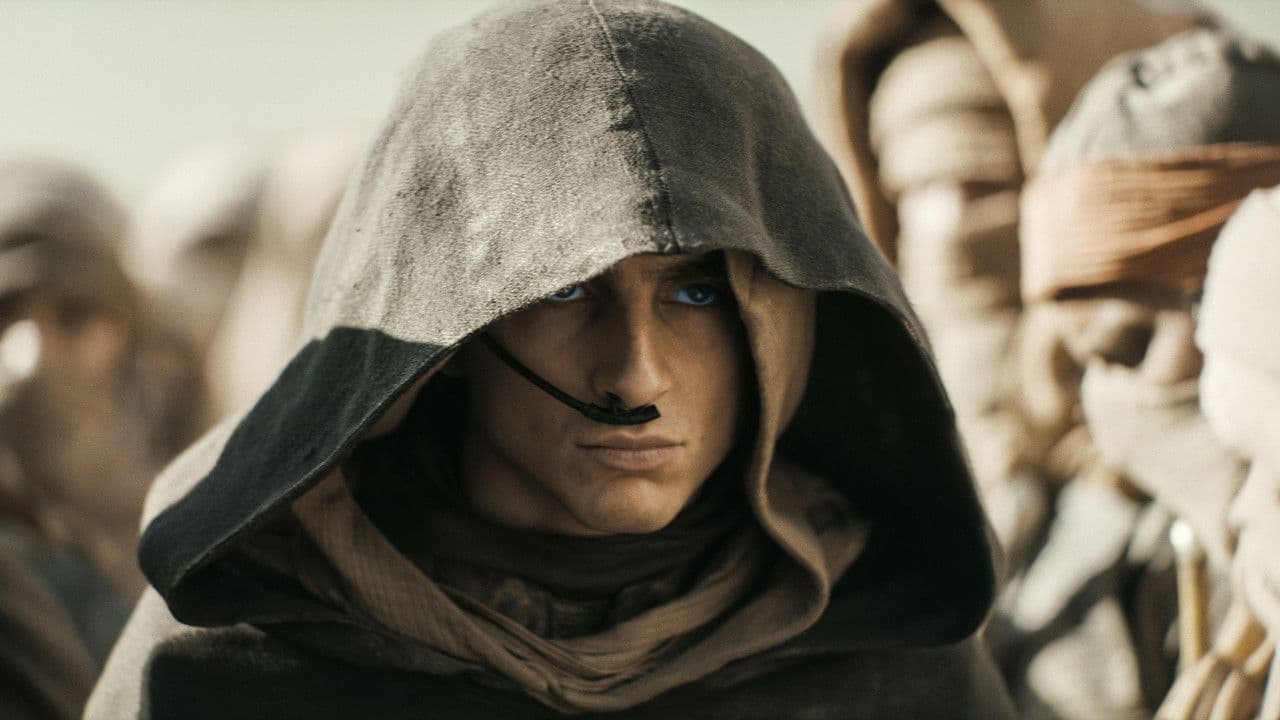
Dune: Part Two
Can Karayel • March 1, 2024
Summarize this with AI
Rating
With Dune: Part Two, Denis Villeneuve once again ascends to the pinnacle of science fiction cinema. Transforming the second half of Frank Herbert's legendary novel into a breathtaking visual feast, the film is not merely an adaptation — it is a testament to the sheer power of cinematic art.
Denis Villeneuve's first Dune film, which captivated audiences in 2021, had contented itself with bringing only half of Frank Herbert's cult novel to the screen. Dune: Part Two picks up exactly where that story left off, transforming it into one of the most visually and emotionally overwhelming experiences science fiction cinema has ever produced.
A Messiah Born in a Sandstorm: Story and Thematic Analysis
Paul Atreides' transformation into Muad'Dib among the Fremen people is not simply a hero's journey — it is a sharp critique of religion, power, and the concept of destiny. Villeneuve masterfully brings to the screen Herbert's critique of the white savior mythos embedded in the novel. Paul's manipulation of a Fremen people who see him as their Messiah serves as a powerful reference to history's endlessly repeating cycles.
The film deepens this critical perspective through the character of Chani. Played by Zendaya, Chani emerges as a voice that regards Paul's rise with skepticism and questions her own people's blind faith. This approach offers an even bolder and more contemporary perspective than the original novel's narrative.
Villeneuve's Cinematic Genius
With Dune: Part Two, Denis Villeneuve once again proves just how powerful visual storytelling can be. Greig Fraser's cinematography renders the deserts of Arrakis into an almost tangible reality. The appearance of the sandworms' colossal bodies on screen secures its place among the most unforgettable images in modern cinema.
The director's minimalist approach to dialogue allows the visuals to do the talking. Despite its 165-minute runtime, the film never sacrifices momentum in a single scene. Every shot, every frame, has been crafted as an integral piece of the story. The sequence in which Paul rides a sandworm, in particular, is a moment where the magic of cinema is felt in its fullest sense. To film this scene, the crew spent months in the deserts of Jordan and Abu Dhabi, erecting massive sets among real sand dunes.
The Power of the Cast
Timothée Chalamet portrays Paul Atreides' dark transformation with extraordinary maturity. His evolution from a young prince into a leader imprisoned by his own mythology stands as one of Chalamet's finest performances on record. The way the gleam in his eyes gradually hardens into a cold, steely resolve conveys the character's inner conflict more powerfully than any words could.
Austin Butler's interpretation of Feyd-Rautha arrives from a completely unexpected direction. In Butler's hands, the ruthless heir of House Harkonnen becomes a figure that is sadistic yet somehow nearly tragic. The black-and-white arena sequence lays bare both Butler's physical transformation and the monster lurking within the character. The actor underwent months of specialized combat training for the role and completely transformed his physique.
Rebecca Ferguson's Lady Jessica becomes far more complex than she was in the first film. As a mother who surrenders herself to the power of the Bene Gesserit sisterhood, Ferguson radiates both fear and authority in equal measure. Zendaya, meanwhile, offers far more than a romantic interest in the role of Chani — she becomes a symbol of critical thought and resistance.
Hans Zimmer's Epic Symphony
Hans Zimmer's score is perhaps the single most powerful element of Dune: Part Two. The composer expands the sonic world he built in the first film, weaving the rhythmic drumbeats of Fremen culture and the howl of desert winds together with electronic and orchestral elements. Drawing inspiration from Middle Eastern musical traditions, Zimmer had entirely new instruments designed and constructed, creating a sonic palette unlike anything heard in any other film.
The music accompanying the film's final battle sequence practically shakes the walls of the cinema. Low-frequency percussion evokes the subterranean movement of sandworms, while layered vocals capture the fervor of Fremen warriors.
Behind-the-Scenes Secrets
The production of Dune: Part Two has gone down in cinema history as one of the most grueling shoots ever undertaken. The crew was forced to contend with every challenge that comes with filming in a real desert environment. The specialized effect machines used for the sandstorm sequences were capable of blasting 200 kilograms of sand per second. Cast and crew alike were required to wear specially designed protective suits against the extreme heat.
One fascinating detail: to make Fremen traditions feel more authentic, Villeneuve collaborated with anthropologists and adapted real rituals from desert cultures for the film. The sandwalking technique was inspired by the methods real desert tribes use to avoid attracting sandsnakes.
Additionally, all of the Fremen costumes in the film were handmade, with each one taking an average of six to eight weeks to produce. The design of the stillsuits — the desert survival garments — was developed drawing inspiration from NASA's spacesuit technology.
Its Place in Cinema History
Dune: Part Two demonstrates that, after David Lynch's failed attempt in 1984, Herbert's work has finally found the cinematic treatment it deserves. Villeneuve's approach is not merely an adaptation, but an interpretation that is both respectful of its source material and distinctly its own.
By pushing the possibilities of the science fiction genre to their absolute limits, the film takes its rightful place alongside works like Blade Runner 2049 and Arrival. The film drew enormous box office interest in Turkey, leaving a particularly strong impression on younger audiences. Seen in IMAX format, it serves as a powerful reminder of just how extraordinary the cinema experience can be.
Conclusion: The Epic of Our Age
Dune: Part Two will go down in history as one of the most significant science fiction films not just of 2024, but of the past decade. By bringing together technical perfection, powerful performances, and rich thematic layers, Villeneuve reaches the very summit of cinematic art. The film also boldly confronts some of the most pressing issues of our time — climate crisis, fanaticism, and the struggle for power. This 165-minute cinematic journey is one of those rare films that manages to enthrall its audience with every single second, reminding us that cinema remains as magical an art form as it has ever been.
Frequently Asked Questions
Is Dune: Part Two worth watching?
Yes, with a FoxFilm score of 9.2/10, Dune: Part Two is highly worth watching as Denis Villeneuve delivers a breathtaking visual feast that elevates science fiction cinema. The film successfully adapts the second half of Frank Herbert's legendary novel with stunning cinematography and epic storytelling.
Do I need to watch Dune: Part One before Dune: Part Two?
Yes, you should watch Dune: Part One (2021) before Part Two, as it continues directly from where the first film ended. Part Two covers the second half of Frank Herbert's novel, so watching Part One is essential to understand the story and characters.
Is Dune: Part Two getting a sequel or Part Three?
Yes, a third Dune film titled Dune: Messiah is in development with Denis Villeneuve returning to direct. This would adapt the second book in Frank Herbert's series and continue Paul Atreides' story beyond Part Two.
Where can I watch Dune: Part Two?
Dune: Part Two is available for streaming on Max (formerly HBO Max) and can also be rented or purchased on digital platforms like Amazon Prime Video, Apple TV, and Vudu. The film was released theatrically in March 2024 before becoming available for home viewing.