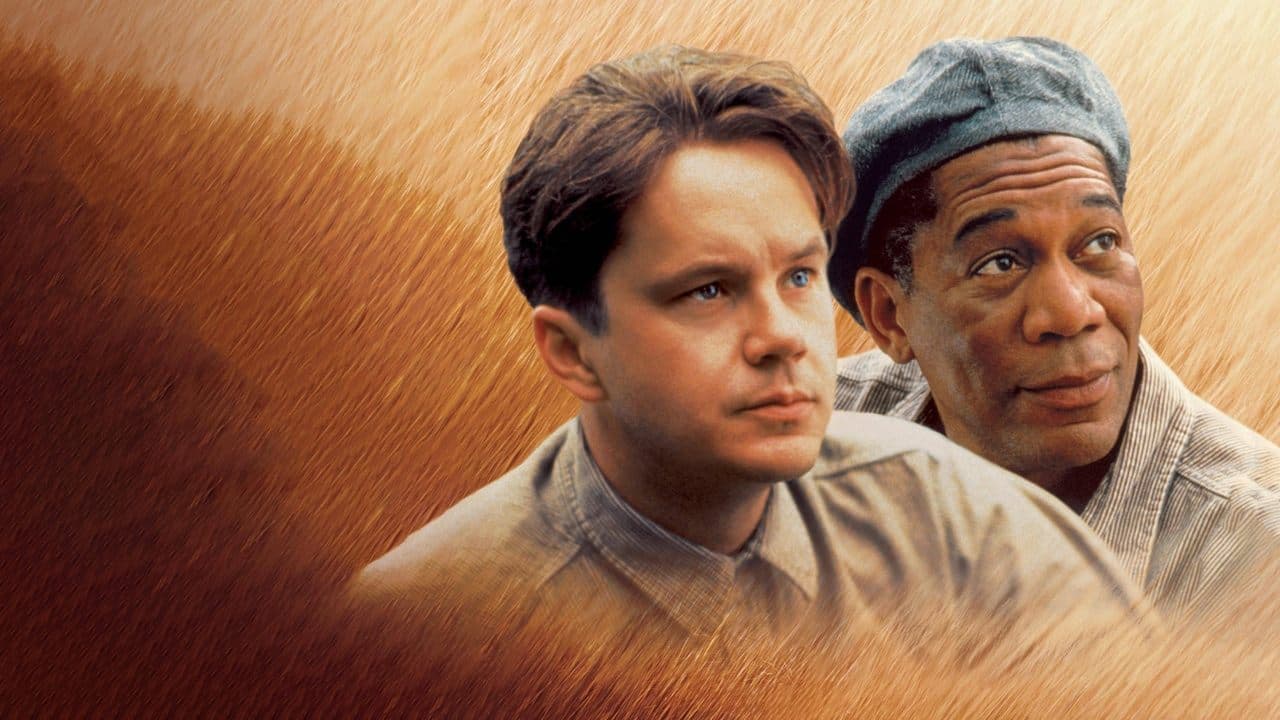
The Shawshank Redemption
Can Karayel • June 17, 2026
Summarize this with AI
Rating
Frank Darabont's Stephen King adaptation The Shawshank Redemption is cinema history's most powerful manifesto of hope. This 1994 masterpiece offers a universal story about the freedom of the human spirit beyond physical prison walls. Supported by unforgettable performances from Tim Robbins and Morgan Freeman, the film has deeply moved millions of viewers for three decades.
Regarded as one of cinema history's most beloved films, The Shawshank Redemption experienced a surprising failure upon its 1994 release, but subsequently achieved cult status over time and settled at the top of IMDB. This masterpiece, Frank Darabont's first feature-length directorial effort, is adapted from Stephen King's novella Rita Hayworth and Shawshank Redemption.
The film's story focuses on the twenty years young banker Andy Dufresne spends in Shawshank prison after being accused of murdering his wife and her lover in 1947. Despite Andy's claims of innocence, his conviction creates a powerful metaphor for the injustice of the system. The friendship he forms here with Ellis Boyd Redding, nicknamed Red, constitutes the film's emotional backbone. The Shawshank Redemption is not merely a story of imprisonment, but also a profound meditation on the power of hope, the meaning of friendship, and the resilience of the human spirit.
Frank Darabont's screenplay masterfully translates Stephen King's literary power to cinema. The director transforms this story set within prison walls into a universal manifesto of freedom. One of the film's strongest aspects is how it patiently and subtly develops the characters' psychological evolution. Andy's strategic relationships with oppressive figures like prison warden Norton and guard Hadley offer a clever portrait of corrupting the system from within.
Tim Robbins' performance in the role of Andy Dufresne is one of cinema history's most unforgettable characterizations. Robbins reflects his character's inner strength and determination through minimalist acting. The subtle changes in his facial expressions tell volumes of unspoken story. Morgan Freeman, meanwhile, becomes virtually the film's conscience with his character Red. Freeman's deep and soothing voice expertly guides the viewer through this twenty-year journey as a narrator telling the story. The chemistry between the two actors on screen is so organic that it leaves no doubt about the authenticity of their friendship.
Cinematographer Roger Deakins' visual language transforms The Shawshank Redemption into visual poetry. While Deakins creates the cold and bleak atmosphere of the prison environment, he emphasizes moments of hope with light, creating a powerful contrast. The scene where the Duettino - Sull'aria piece from Mozart's Le Nozze di Figaro opera plays over the loudspeakers is one of the film's most iconic moments. In this scene, the camera captures one by one the faces of prisoners liberated by the music's effect, proving the power of cinematic language.
Thomas Newman's music is one of the most important elements reinforcing the film's emotional depth. Newman's melodies are both melancholic and hopeful, just like the film itself. Especially the music used in the tragic story of the character Brooks makes holding back tears impossible. The editing, meanwhile, fluidly narrates a twenty-year time span, making no scene feel excessive or lacking.
Behind-the-scenes information shows how special The Shawshank Redemption's production process was. The film created disappointment at the box office upon release, earning only 28 million dollars. However, it achieved cult status through rentals and television broadcasts. An interesting detail: in the book, the character Red is a red-haired Irishman, but Darabont wanted Morgan Freeman so much that he only changed the joke in the screenplay about where Red's name came from. Another interesting point: the Ohio State Penitentiary where the film was shot was a real prison and had been actively used until 1990.
The film's final scene is considered one of cinema history's most satisfying conclusions. The revelation of Andy's years-long plan and his reunion with Red on the beaches of Zihuatanejo, Mexico creates the same emotional impact with each viewing. This scene is a perfect example visualizing the triumph of hope and freedom.
The Shawshank Redemption, which also holds a special place among Turkish cinephiles, is cited as the favorite film by countless viewers in our country. The film's universal themes - being wrongly accused, resistance against the system, true friendship - resonate with viewers from every culture. Especially Red's monologues during his parole hearings offer profound reflections on the meaning of life and regret.
In conclusion, The Shawshank Redemption is not just a film, but proof of how powerful the art of cinema can be. This three-decade-old masterpiece possesses a richness where new details can be discovered with each viewing. With this film, Frank Darabont conveys that hope can exist even behind bars, that freedom is not a place but a state of mind. The Shawshank Redemption is one of those rare films that changes something inside you when you watch it, reshaping your perspective on life. Like Red's final words: I hope.
Frequently Asked Questions
Is Esaretin Bedeli based on a true story?
No, Esaretin Bedeli (The Shawshank Redemption) is not based on a true story. It is adapted from Stephen King's 1982 novella 'Rita Hayworth and Shawshank Redemption' from his collection 'Different Seasons.'
Did Esaretin Bedeli win any Oscars?
Despite receiving seven Academy Award nominations in 1995, including Best Picture and Best Actor for Morgan Freeman, The Shawshank Redemption did not win any Oscars. However, it has since become one of the most beloved films in cinema history.
Is Esaretin Bedeli worth watching?
Absolutely, with a perfect FoxFilm score of 10.0/10, Esaretin Bedeli is widely regarded as cinema's most powerful manifesto of hope and a masterpiece of storytelling. It's a must-watch film that resonates universally with audiences.
Who directed Esaretin Bedeli and when was it released?
Esaretin Bedeli (The Shawshank Redemption) was directed by Frank Darabont and released in 1994. It marked Darabont's feature film directorial debut and established him as a master of Stephen King adaptations.