Godzilla Minus Zero
Can Karayel • November 26, 2026 • Written with AI assistance
Godzilla Minus Zero: plot in brief
Godzilla Minus Zero is set in 1949, two years after the events of the first film, and follows the Shikishima family on the brink of a new disaster. Struggling to survive amid postwar Japan's poverty and guilt, the family must face the renewed threat of the monster.
Summarize this with AI
Want to see more FoxFilm reviews in your Google results? Add us as a preferred source.
Add FoxFilm as a preferred source on GoogleRating
As the follow-up to Minus One in Takashi Yamazaki's kaiju series, Godzilla Minus Zero reopens the wounds of postwar Japan. In this Godzilla review, we look at the story, the visual effects, the performances, and the film's cultural weight.
INTRODUCTION: Mourning a Monster
Since 1954, Godzilla has been less a creature than the name of a collective trauma. Ishiro Honda's original film was born from the nuclear fallout that struck the fishing boat Lucky Dragon 5. Takashi Yamazaki's Godzilla Minus One revived that legacy and was rewarded both at the box office and at the Oscars (Best Visual Effects). Now, with Godzilla Minus Zero, we return to the same world. The newest entry in the series asks a question cinema has rarely cared for: has a person who survives a catastrophe truly managed to survive?
Story and Screenplay
The film is set in 1949, two years after the chaotic events of the first film. The Shikishima family stands on the brink of a new devastation. This summary also reveals what the film cares about: the monster threat is there, but the real weight lies with the family. Yamazaki's screenplay avoids the biggest trap of kaiju cinema, reducing human characters to extras waiting to be crushed. The poverty of postwar Japan, its guilt, and its distrust of the state are woven into the fabric of the story. This will feel familiar to Turkish viewers. A society that lived through the 1999 Marmara Earthquake should understand well the struggle to go on living with lives left buried under the rubble. The screenplay's weakness is that in the second act it states some emotional beats too explicitly. The dose of melodrama occasionally gets out of hand, but the film mostly makes up for this flaw with genuine warmth.
Direction and Cinematography
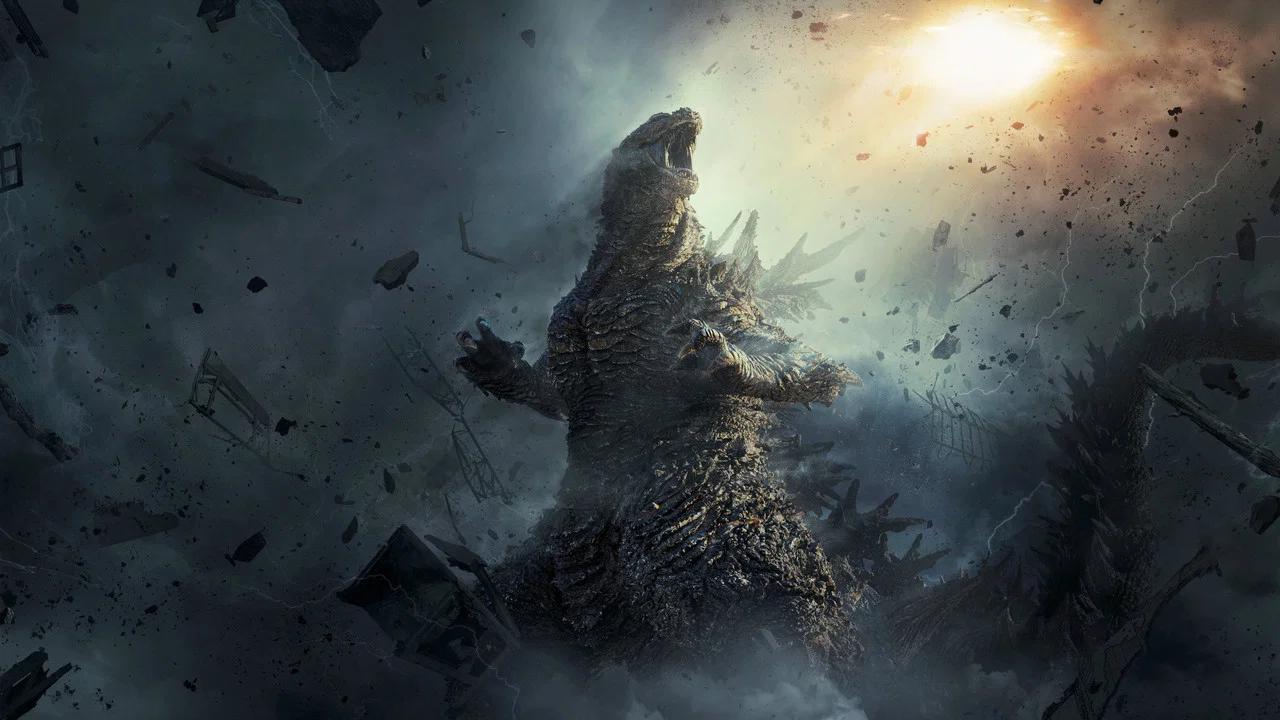
Yamazaki is also a director who is a visual effects specialist. This is a major advantage for Godzilla Minus Zero. The effects sequences don't feel like a spectacle separate from the story; they flow as a natural extension of the narrative. The camera usually shows the monster from human eye level, preserving a sense of fear and helplessness. The choice to use silence in the moments when a colossal being appears on the horizon is the film's most effective source of dread. The physical feel of water, smoke, and light, combined with the muted color palette of the 1940s, gives the film an atmosphere that is both nostalgic and menacing. In the action scenes the geography is clear and the editing is legible. This clarity, which keeps its distance from the chaos of modern blockbusters, is Yamazaki's greatest achievement.
Performances
Ryunosuke Kamiki deepens his portrait of a man carrying guilt and defeat after the first film. Even in moments when he doesn't speak, the exhaustion in his eyes says a great deal. Minami Hamabe sits at the film's emotional center and adds weight to the story with her calm but resilient performance. Supporting actors such as Hidetaka Yoshioka and Min Tanaka make the team spirit and the relationships between generations believable. Masami Nagasawa and Yuki Yamada, meanwhile, carry the humor and human warmth in a balanced way. The ensemble acting is one of the film's strongest layers.
Technical Details
The score approaches the legacy of Akira Ifukube, who defined the series, with respect. The famous Godzilla theme, rhythmic, eerie, and almost ceremonial, both feeds the tension and gives the audience a sense of nostalgia that connects them to the series. In the sound design, Godzilla's roar is used not merely as an element of fear but almost as a cry of mourning. The editing mostly carries the 135-minute running time well. However, the pace dips a little in the middle section, and some subplots take up more room than they need to. The production design and costumes carefully reflect the spirit of the period. Small details, such as ruined neighborhood streets, makeshift shelters, and postwar daily life, make the film convincing.
Behind the Scenes and Fun Facts
First, it is often mentioned that Godzilla Minus One was made on a budget of roughly 15 million dollars, which is very low by Hollywood standards. This shows how efficiently Yamazaki's small, disciplined effects team at the Shirogumi studio worked. Second, the series' 1954 starting point is based on the very real fear created by nuclear tests in the Pacific. Japan's Lucky Dragon 5 incident is known as the historical event that inspired the monster's birth. Third, Godzilla Minus One's Oscar win was a historic moment, as it was the first time a Japanese kaiju film was honored by the Academy. For this reason, anticipation for the sequel was not limited to the fan base alone. Since part of what is known about the film still rests on statements from the production team, I'm leaving the surprises for the viewer.
Conclusion and Cultural Impact
Godzilla Minus Zero does not fully fall into the trap of repetition that sequels so often stumble into. While preserving the weight that belongs to the series, it offers a new threat and a new emotional burden. A score of around 7.6 on TMDB also shows that audiences have largely endorsed this approach. The success of the previous film played a big part in kaiju cinema moving out of the niche and reaching a wide audience in Turkey. This film is a candidate to carry that momentum forward. It has its shortcomings: the dose of melodrama and the loss of pace in the middle section. Even so, it is one of the rare productions in modern science fiction and horror cinema that can tie visual spectacle to a human story. It is a film that should be seen on the big screen and that stays with you for a long time afterward.
Frequently Asked Questions
What is Godzilla Minus Zero about?
Godzilla Minus Zero is set in 1949, two years after the events of the first film. The Shikishima family stands on the brink of a new devastation. The monster threat is present, but the story focuses on the family and on postwar Japan's poverty, guilt, and distrust of the state.
What genre is Godzilla Minus Zero?
Godzilla Minus Zero is a Science Fiction, Horror, and Action film. It is the follow-up to Godzilla Minus One in Takashi Yamazaki's kaiju series.
Who directed Godzilla Minus Zero?
Takashi Yamazaki directed Godzilla Minus Zero. He is also a visual effects specialist, which the review calls a major advantage for the film. His previous Godzilla film, Godzilla Minus One, was rewarded at the box office and won the Oscar for Best Visual Effects.
How does Godzilla Minus Zero present its monster scenes?
The camera usually shows Godzilla from human eye level, which preserves a sense of fear and helplessness. Silence is used in the moments when the colossal creature appears on the horizon. The effects sequences feel like part of the story rather than a separate spectacle.
What language is Godzilla Minus Zero in?
Godzilla Minus Zero was originally made in Japanese.
Who is in the cast of Godzilla Minus Zero?
The cast includes Ryunosuke Kamiki, Minami Hamabe, Hidetaka Yoshioka, Min Tanaka and Masami Nagasawa.
How long is Godzilla Minus Zero?
Godzilla Minus Zero runs 2 h 15 min (135 minutes).