Moana
Can Karayel • August 1, 2026
Summarize this with AI
Rating
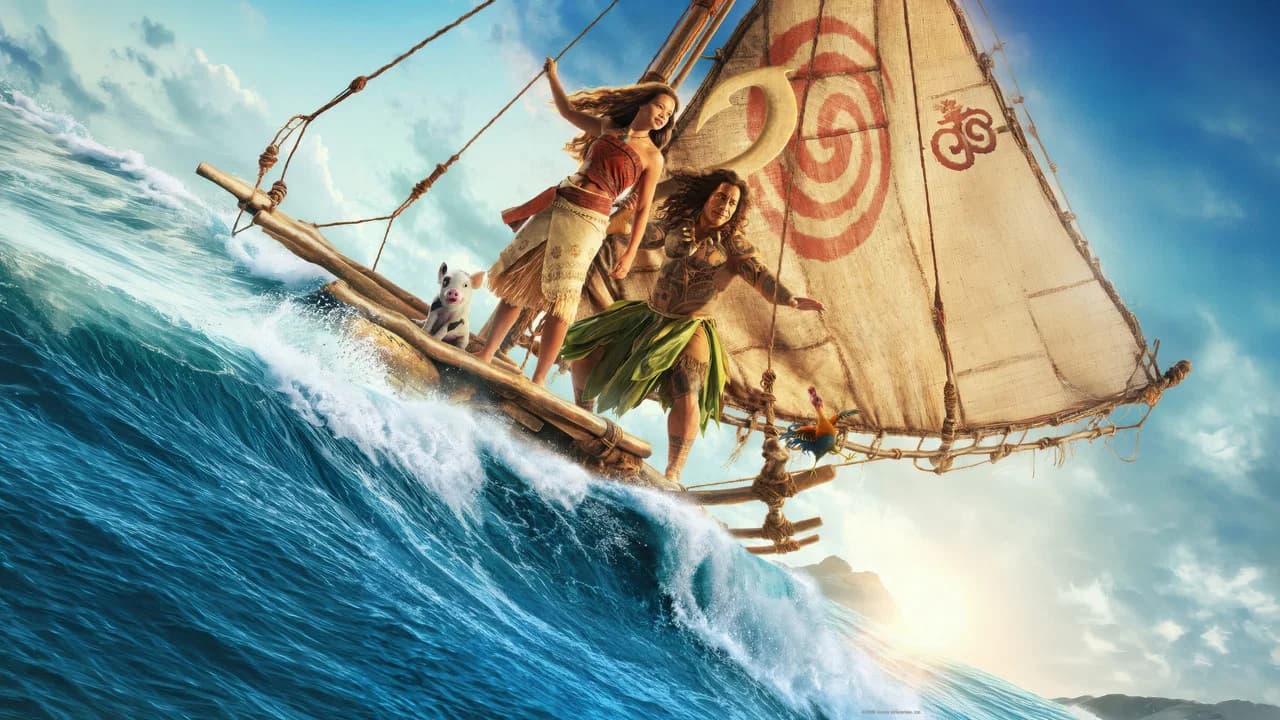
Disney's live-action adaptation of its 2016 animated success, Moana, directed by Thomas Kail, emerges as a visually impressive yet spiritually hollow remake. While Catherine Laga'aia's debut and Dwayne Johnson's return as Maui lend the film a nostalgic air, it struggles to capture the magic of the original animation.
Disney's recent obsession with converting its classic animations into live-action format continues with Moana. Remaking the 2016 original just ten years later feels like proof that the studio prefers playing it safe over creative courage. Broadway veteran director Thomas Kail attempts to bring his success from productions like Hamilton and Grease Live to the big screen, but the result falls short of expectations.
The film's strongest aspect is undoubtedly its visual presentation. The breathtaking landscapes of the Pacific islands, with sweeping shots ranging from turquoise waters to volcanic mountains, are stunning. The cinematographer successfully translates the animated film's vibrant palette into the real world. However, there's a critical problem here: the boundless imagination of animation collides with the physical constraints of reality. Magical moments like Te Fiti's transformation become indistinguishable from animation due to CGI overload, leaving viewers wondering why they didn't just rewatch the original.
Catherine Laga'aia, the new Moana, carries significant representational value as a young actress of Samoan descent. Disney's continued respectful approach to Pacific cultures is commendable. Laga'aia successfully captures the character's determined and curious nature, but struggles to translate the emotional depth from Auli'i Cravalho's voice in the animated version into physical performance. Particularly during the How Far I'll Go sequence, having to rely on facial expressions rather than vocal inflection makes emotional connection more difficult.
Dwayne Johnson's return as Maui is the film's most entertaining aspect. Johnson, who only voiced the character in the original and now embodies him physically, dominates scenes with his natural charisma and comedic timing. The live-action version of You're Welcome is one of the film's most energetic moments. However, the character's digital tattoos and shape-shifting scenes create an artificial feel in movements that appeared far more fluid in animation. The disconnect between Johnson's actual physique and Maui's exaggerated physical comedy sometimes undermines the character's believability.
Tamatoa, the giant crab voiced by Jemaine Clement, was one of the original film's most entertaining side characters. In the new version, the character being entirely CGI doesn't add much to the Flight of the Conchords star's vocal performance. The live-action adaptation of Shiny, while attempting to replicate the animation's psychedelic visuals, resembles a video game cutscene.
Thomas Kail's directorial approach is partially successful in translating theatrical stagecraft into cinematic language. Musical numbers feature expansive choreography and dynamic camera movements. However, the film's overall pacing is uneven; some scenes are unnecessarily prolonged while moments requiring emotional intensity feel rushed. The farewell scene between Moana and her grandmother fails to capture the melancholic beauty of the animation. This reveals the paradoxical weakness of live-action format: real actors can sometimes offer less emotional depth than animated characters because animators can optimize emotion for every frame, while such control isn't possible with live performances.
The music department retains Lin-Manuel Miranda's original songs, but the new arrangements aren't always successful. We Know the Way remains a powerful moment celebrating Pacific cultures' seafaring traditions. However, some orchestrations contain overly modern pop elements that disrupt the film's mythological atmosphere. Mark Mancina's score has similar issues; emotional peaks are predictable and clichéd.
The film's production design attempts to authentically reflect cultural elements of the Pacific islands. Motunui village's traditional architecture, handicrafts, and clothing were created through detailed research. Disney's continuation of working with cultural consultants is positive from a representation standpoint. However, all these details seem like effort wasted on an essentially unnecessary remake.
An interesting behind-the-scenes detail: the digital technology used to animate Maui's tattoos was inspired by Thanos's CGI. A separate animator was assigned for each tattoo animation, adapting them to Johnson's actual muscle movements. Another fun fact: Catherine Laga'aia was selected after thousands of auditions worldwide. Disney's determination to find an authentic Polynesian actress is admirable.
The film's biggest problem is existential: why does it exist? The 2016 film is still fresh and accessible. The live-action version neither brings a new perspective nor addresses the original's shortcomings. Instead, it reminds us why the animation's perfect timing and stylized visuals were so effective. Moana's story explores universal themes: finding your own path, balancing tradition with innovation, harmony with nature. But these themes aren't deepened in the new version—they're merely repeated.
For Turkish audiences, the film functions as summer family entertainment. The visuals are impressive, the messages positive, and Dwayne Johnson's star power is enough to draw children and parents to theaters. However, for lovers of the animated classic, this version will disappoint. Moana's voyage to sea was a bold step, but this remake has chosen to stay in safe harbor.
Frequently Asked Questions
Who plays Moana in the 2026 live-action movie?
Catherine Laga'aia makes her debut as Moana in Disney's 2026 live-action adaptation directed by Thomas Kail.
Is the live-action Moana a remake of the animated movie?
Yes, the 2026 live-action Moana is a remake of Disney's 2016 animated film of the same name.
Who directed the live-action Moana movie?
The live-action Moana was directed by Thomas Kail, known for his work on Hamilton.
Is the 2026 Moana worth watching?
With a FoxFilm score of 6.2/10, the live-action Moana is visually impressive but has been criticized as spiritually hollow compared to the original animated film.