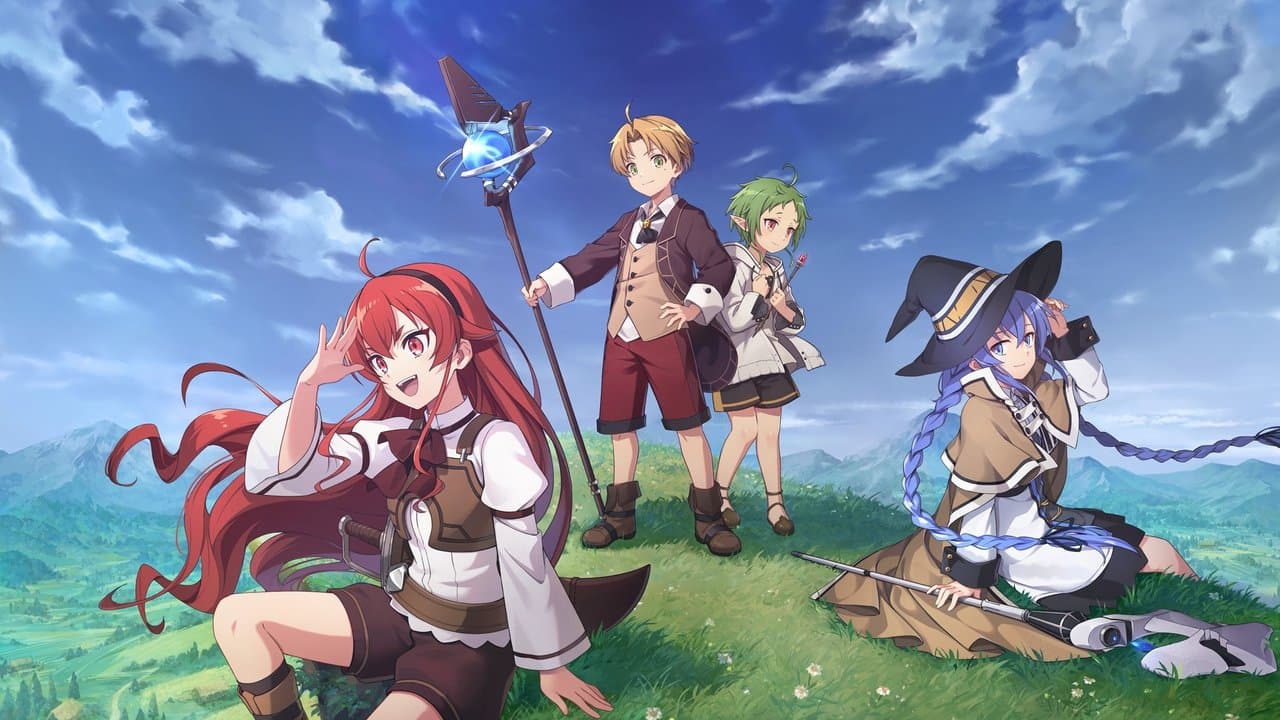
Mushoku Tensei: Jobless Reincarnation
Can Karayel • August 4, 2026
Summarize this with AI
Rating
Mushoku Tensei: Isekai Ittara Honki Dasu sets a new standard in the anime world by combining the reincarnation theme with mature storytelling. As Studio Bind's debut project, it stands as one of the genre's most ambitious productions with its dazzling animation quality and complex character development.
The isekai genre has become one of the anime industry's most popular and simultaneously most controversial categories over the past decade. While dozens of new productions hit screens each season, most fade away by repeating similar clichés. It's precisely at this point that Mushoku Tensei: Isekai Ittara Honki Dasu creates a true revolution by taking all the genre's conventions and rewriting them from scratch. This production, which began airing in 2021 and now presents us with its third season, is not just a fantasy adventure but also a profound portrait of humanity's journey of self-discovery and transformation.
Mushoku Tensei's story may seem familiar at first glance: a 34-year-old NEET character, disconnected from life and a burden to society, dies tragically and is reborn in a magical world. However, the series' strength lies in how it handles this simple premise. Our character, who takes the name Rudeus Greyrat, carries with him all the traumas, regrets, and experiences of his past life. This situation opens the door to a truly multidimensional and flawed protagonist, unlike typical isekai heroes. Rudeus's journey isn't just about becoming a powerful mage; it's about escaping the shadow of his past and learning to truly live.
Studio Bind was established specifically for Mushoku Tensei and took an enormous risk in bringing this story to screen. Being the studio's first project, the team's dedication to this production is felt in every frame. Director Manabu Okamoto and his team have brought the fantasy world to life with incredible visual richness. You can see cinema-quality animation work in every episode. Particularly the choreography of magic scenes and environmental designs are among the finest examples of what the anime industry can achieve.
One of Mushoku Tensei's most striking aspects is the importance it places on world-building. While in most isekai productions the world remains merely a backdrop, here it functions like a living organism with its own laws, history, cultures, and languages. As characters travel to different continents, we encounter each region's unique architecture, clothing styles, and social structures. This level of detail makes viewers truly feel part of this world.
As seasons progress, Mushoku Tensei develops its characters with extraordinary depth. Besides Rudeus, supporting characters like Roxy, Sylphiette, and Eris tell their own stories. Especially seeing how character relationships evolve in the third season reveals the series' emotional maturity. Internal conflicts, moral dilemmas, and characters confronting their past traumas prove that anime isn't limited to just action and adventure.
The voice cast also does their job flawlessly. Uchiyama Yumi bringing young Rudeus to life and Sugita Tomokazu voicing the adult consciousness within perfectly reflects the character's dual nature. The voice acting performances in scenes dealing with themes of loss and loneliness are truly tear-jerking. Bringing this multilayered character to life is no easy task, but the team accomplishes it successfully.
The music department has also produced impressive work under Fujisawa Yoshiaki's direction. While orchestral arrangements strengthen the fantasy atmosphere, minimalist approaches are used in emotional scenes. The opening and ending themes also change from season to season in parallel with the characters' development, and even this detail shows how meticulous the producers are.
In terms of behind-the-scenes information, Mushoku Tensei is a true passion project. Original light novel author Rifujin na Magonote took an active role in every stage of production. The studio developed special facial motion systems to make character expressions more realistic. Additionally, an average of six months of pre-production time was allocated for each episode, which is an almost unheard-of luxury in the anime industry. The Turning Point scene in episode 11 of the first season was created with approximately 300 animators working for three months.
The series is not without its controversial aspects. Western audiences in particular may find the character's negative traits from his past life carrying over to his new life disturbing. However, the producers handle this situation deliberately because the story's fundamental issue is precisely the process of change and maturation of a flawed person. From this perspective, Mushoku Tensei is one of those rare productions that avoids morally easy answers and forces viewers to think.
In the third season, the story enters darker waters. The challenges characters face are no longer just physical but extend to psychological and existential dimensions. Rudeus's traumas related to his family, his fear of being unable to protect his friends, and his search for identity form the season's core themes. This level of maturity makes Mushoku Tensei a sophisticated production appealing to a young adult audience.
In conclusion, Mushoku Tensei: Isekai Ittara Honki Dasu tells a truly universal story by breaking the clichés of the isekai genre. Themes such as second chances, regret, change, and the complexity of human relationships are blended with fantastical elements to create a powerful narrative. With its technical excellence, character depth, and bold storytelling, this production holds an important place not only in anime history but in television storytelling in general. For Turkish audiences as well, themes of family, responsibility, and personal transformation will feel familiar. Mushoku Tensei is the finest proof of how far modern anime can go, and it crowns this success with its third season.
Frequently Asked Questions
Is Mushoku Tensei: Isekai Ittara Honki Dasu worth watching?
With a FoxFilm score of 8.7/10, Mushoku Tensei: Isekai Ittara Honki Dasu is definitely worth watching as it sets a new standard in anime by combining reincarnation themes with mature storytelling. It was Studio Bind's impressive debut project that has been highly praised by fans and critics alike.
Is Mushoku Tensei: Isekai Ittara Honki Dasu getting a season 2?
Yes, Mushoku Tensei has been renewed for multiple seasons. The series premiered in 2021 and has continued with additional seasons due to its popularity and strong reception from the anime community.
What studio animated Mushoku Tensei: Isekai Ittara Honki Dasu?
Mushoku Tensei: Isekai Ittara Honki Dasu was animated by Studio Bind, and it was actually their debut project. The studio was specifically established to produce this series, showcasing exceptional animation quality from the start.
Where can I watch Mushoku Tensei: Isekai Ittara Honki Dasu?
Mushoku Tensei: Isekai Ittara Honki Dasu is available to stream on various anime platforms including Crunchyroll and Funimation. The series is available with both subtitles and dubbed versions depending on your preference.