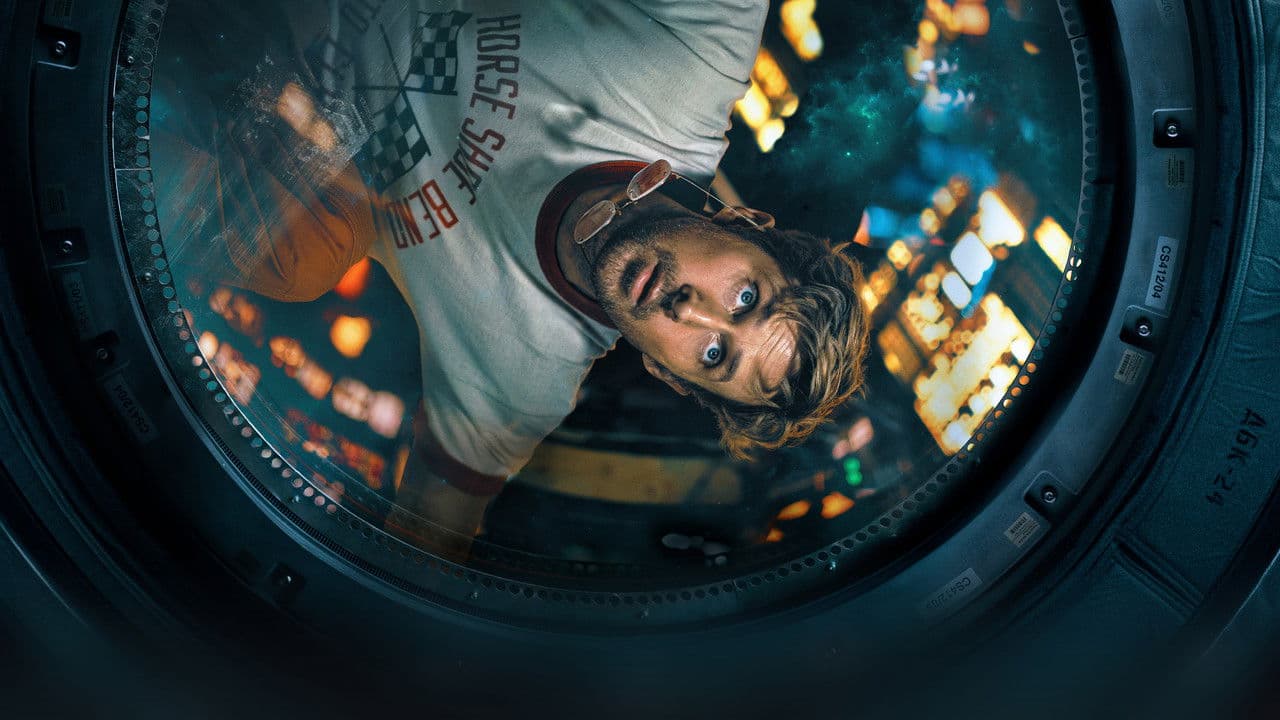
Project Hail Mary
Can Karayel • August 1, 2026
Summarize this with AI
Rating
Phil Lord transforms Andy Weir's groundbreaking novel into a mesmerizing space epic. Bolstered by what could be considered the pinnacle of Ryan Gosling's career, the film pushes the boundaries of cinema by blending science fiction's intellectual depth with an emotional tale of friendship.
Project Hail Mary emerges as one of the most ambitious productions in science fiction cinema in recent years. This epic production, directed by Phil Lord, is adapted from Andy Weir's novel of the same name and takes the scientific meticulousness the author previously demonstrated with The Martian a step further. Despite its 157-minute runtime, the film keeps viewers glued to the screen from start to finish, offering both a mental exercise and a heart-wrenching emotional journey.
The film's greatest strength lies in its courage to convey complex scientific concepts through the eyes of an ordinary science teacher. The character of Ryland Grace breaks the stereotypical molds of space heroes, making science exciting and accessible. The awakening scenes with memory loss create a narrative structure woven with gradual flashbacks. This technical choice invites the audience to discover alongside the character and keeps the tension constantly alive.
Project Hail Mary's screenplay addresses humanity's survival instinct from a universal perspective. The effort to solve the mystery of the enigmatic Astrophage substance threatening our solar system becomes a metaphor for interspecies cooperation and the power of science. By centering the friendship established with the alien character named Rocky, the film demonstrates that it's possible to forge a bond beyond language and culture. This relationship forms the emotional backbone of the production and adds a warm human touch to the atmosphere we often find cold in the science fiction genre.
Ryan Gosling delivers perhaps the most layered performance of his career in the role of Ryland Grace. He masterfully blends the character's scientific rigor, teacher's warmth, and the desperation of a person trying to survive. Particularly the solitude scenes aboard the spacecraft prove how powerful Gosling's control of facial expressions and body language is. Sandra Hüller's authoritative yet emotional performance in the role of mission commander adds weight to the flashback scenes. The Rocky character, brought to life by James Ortiz through motion capture technology, sets a new standard for bringing digital characters to life.
Phil Lord's directorial vision is like an adaptation of the creative courage he displayed in The LEGO Movie and Spider-Man: Into the Spider-Verse to a space opera. The camera's fluid movements inside the spacecraft perfectly convey the sensation of a zero-gravity environment. Cinematographer Linus Sandgren captures the visual standards created by Interstellar and Gravity while adding his own color. Particularly the scenes in the Eridani star system reveal the terrifying beauty of space.
The film's production design is a success that balances scientific realism with cinematic imagination. The Hail Mary spacecraft, designed in collaboration with NASA consultants, is convincing both functionally and aesthetically. Rocky's ship and the communication systems established with him are a visual feast of creative problem-solving. In the music department, Hans Zimmer's protégé Ludwig Göransson's compositions strengthen emotional moments while adding an epic dimension to scientific discovery scenes.
Project Hail Mary's editing masterfully weaves two timelines together. The rhythm arranged by Daniel Pemberton makes the 157-minute duration imperceptible. The Earth scenes in flashbacks constantly remind us of the mission's urgency, while the current timeline in space keeps the tension at its peak. The film's final half hour is one of the pinnacles of contemporary science fiction in terms of emotional and intellectual satisfaction.
The behind-the-scenes stories of the production are equally impressive. Ryan Gosling took astrophysics classes for six months and met with real astronauts to identify with the role. A two-year development process took place for Rocky's character design, ultimately creating a completely original alien anatomy. Some scenes of the film were shot during actual zero-gravity flights, a first for Hollywood.
For Turkish audiences, Project Hail Mary is an accessible production even for those who are distant from the science fiction genre. The teacher character at the film's center creates universal sympathy with his mission to simplify and make science exciting. Additionally, the theme of sacrifice made on behalf of humanity finds resonance that transcends cultural boundaries.
In conclusion, Project Hail Mary is a new turning point for science fiction cinema. With Phil Lord's visionary approach, strong cast, and technical excellence, the film is among the rare productions that touch both minds and hearts. It's already certain to be one of the most important cinematic experiences of 2026.
Frequently Asked Questions
Is Project Hail Mary based on a book?
Yes, Project Hail Mary is based on Andy Weir's bestselling science fiction novel of the same name, published in 2021. The 2026 film adaptation was directed by Phil Lord and stars Ryan Gosling in the lead role.
Who plays the main character in Project Hail Mary?
Ryan Gosling plays the main character in Project Hail Mary, delivering what many consider to be the pinnacle performance of his career. The film is directed by Phil Lord and was released in 2026.
Is Project Hail Mary worth watching?
With an exceptional FoxFilm score of 9.2/10, Project Hail Mary is definitely worth watching. The film successfully transforms Andy Weir's novel into a mesmerizing space epic with a career-defining performance from Ryan Gosling.
Is Project Hail Mary getting a sequel?
As of now, there has been no official announcement regarding a sequel to Project Hail Mary. The 2026 film is based on Andy Weir's standalone novel, which does not have a published sequel.