The Daily Show
Can Karayel • September 22, 2026
Summarize this with AI
Rating
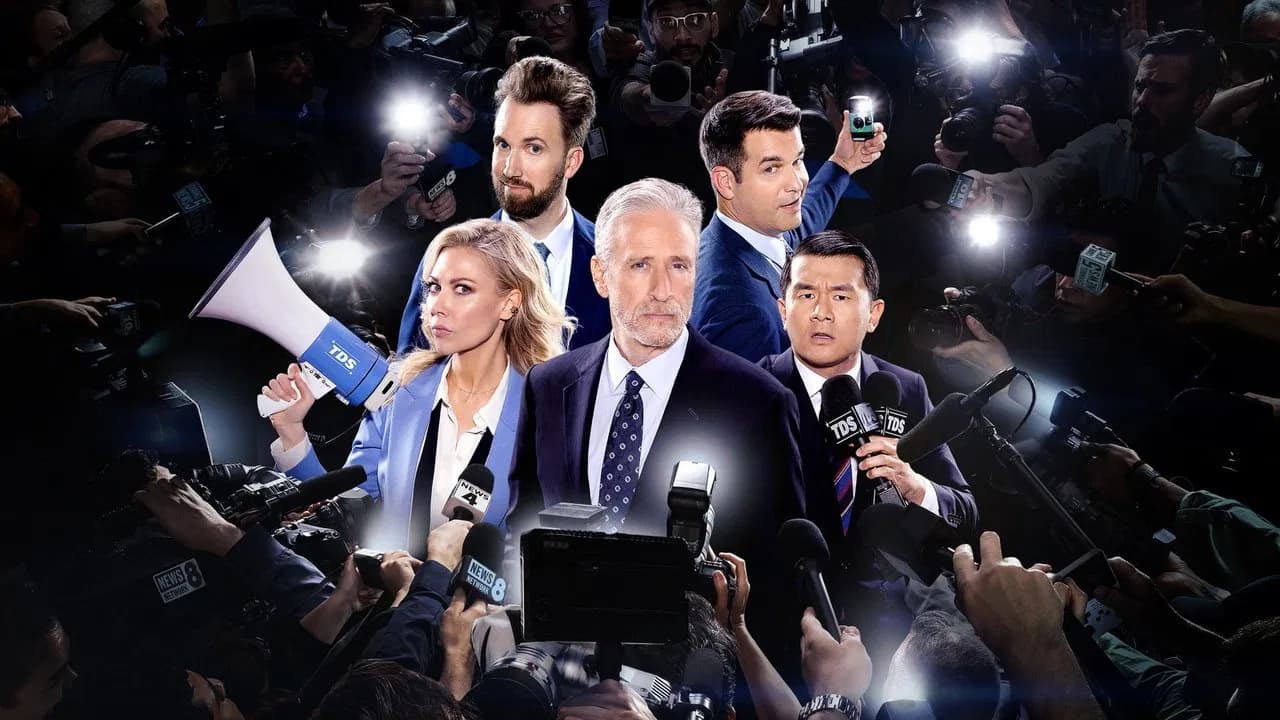
The Daily Show, the conscience of American political satire since 1996, is a revolutionary format offering a masterful blend of news and comedy. Keeping its finger on the pulse of the political agenda through 31 seasons with various hosts in the anchor chair, the program proves the power of humor as a tool for social criticism.
One of the longest-running and most influential political comedy programs in American television history, The Daily Show has been examining the dark side of politics through the bright light of humor for over a quarter century. This format, brought to life by Madeleine Smithberg and Lizz Winstead in 1996, was initially designed as just a late-night talk show, but over time transformed into a phenomenon that keeps its finger on the pulse of American political discourse. Airing on Comedy Central, the program fundamentally changed how younger generations consume news, becoming the most successful example of satirical journalism on television.
Evolution of the Format and Cultural Significance
The truly revolutionary aspect of The Daily Show lies in its ability to blend the seriousness of journalism with the sharpness of comedy. While addressing current political events, the program mimics the classic news format but simultaneously critiques that very format. When Jon Stewart took over as host in 1999, The Daily Show transformed into a cultural phenomenon. During Stewart's 16-year tenure, the program won 22 Emmy Awards and was recognized as the gold standard of political satire. Trevor Noah's hosting from 2015-2022 brought an international perspective to the program, while today the format continues to evolve with a new roster of hosts.
The secret to the program's success lies in its ability to translate complex political issues into language the average citizen can understand. While The Daily Show functions as a primary news source especially for younger demographics, it offers viewers genuine education about political processes. Studies by the Pew Research Center revealed that regular viewers of the program are more knowledgeable about political topics than traditional news viewers. This demonstrates the power of humor to make information digestible.
The Art of Satirical Journalism
The techniques used in producing The Daily Show occupy a unique place in television history. The program masterfully combines real news footage through editing to expose politicians' contradictions, lies, and distortions. This montage technique, the ironic situations that emerge from juxtaposing words and actions, evokes both laughter and deep thought in viewers. Correspondent segments, field interviews, and studio guest appearances create the program's multi-layered structure.
The program's writing team functions as a school that has trained some of the most talented names in American comedy. Names like Steve Carell, Stephen Colbert, John Oliver, Samantha Bee, and Hasan Minhaj, who later created their own successful programs, began their careers as correspondents on The Daily Show. This demonstrates that the program is not just a comedy show but also an institute of satirical journalism. Each developed their own unique comedy styles, carrying The Daily Show's DNA to different platforms.
The Power of Political Criticism
The Daily Show's 31-season journey also functions as documentation of the last quarter century of American politics. From Clinton's impeachment to the Iraq War during the Bush era, from Obama's historic election victory to Trump's turbulent period, the program archived every critical moment through its comedic lens. Moments like Jon Stewart's emotional monologue after 9/11 and his advocacy for firefighters before Congress showed that the program transcended being merely a comedy show to become the voice of social conscience.
The program's significance for Turkish viewers lies particularly in understanding international politics and America's global influence. The Daily Show explains the complex American electoral system, Congressional operations, and foreign policy decisions in simple language, showing global audiences the inner workings of U.S. democracy. The Trevor Noah era especially appealed to international viewers with its immigrant perspective on America.
Behind the Scenes and Interesting Details
The Daily Show's filming takes place at the pace of a real newsroom. The writing team gathers every morning to scan that day's news and prepare material to air that evening within a few hours. This rapid production process maintains the program's timeliness while requiring work under incredible creative pressure. During the Jon Stewart era, an average of 50 jokes were written daily in the writers' room, with only 10-12 making it to air.
One of the program's most iconic elements, the fake correspondent segments, are actually shot using documentary techniques. Correspondents conduct real interviews with real people, but the questions are designed so that interviewees unknowingly reveal their own absurdities. This technique was developed inspired by Christopher Guest's mockumentary films and created a new subgenre in television comedy.
Conclusion: The Social Function of Humor
The Daily Show is a milestone in television history that proves humor's power not only to entertain but also to inform, criticize, and transform. The program functions as an alternative news source and critical thinking tool, especially in an age when trust in traditional media has declined. Throughout its 31-season journey, The Daily Show has influenced not only American television but global political discourse. The satirical journalism format has inspired similar programs around the world. Attempts to create such programs in Turkey demonstrate the power of The Daily Show's universal format. The program continues to leave an indelible mark on television history by proving how humor can be a tool of resistance and awareness.
Frequently Asked Questions
Who was the original creator of The Daily Show?
The Daily Show was created by Madeleine Smithberg and Lizz Winstead in 1996. The show has since become one of the longest-running and most influential political satire programs on television.
Is The Daily Show worth watching?
With a FoxFilm score of 8.7/10, The Daily Show is definitely worth watching as it masterfully blends news and comedy to deliver sharp political satire that has shaped American political discourse since 1996.
What network does The Daily Show air on?
The Daily Show airs on Comedy Central and has been a flagship program for the network since its debut in 1996.
How long has The Daily Show been on the air?
The Daily Show has been on the air since 1996, making it one of the longest-running television programs in the political satire genre with over 25 years of continuous production.