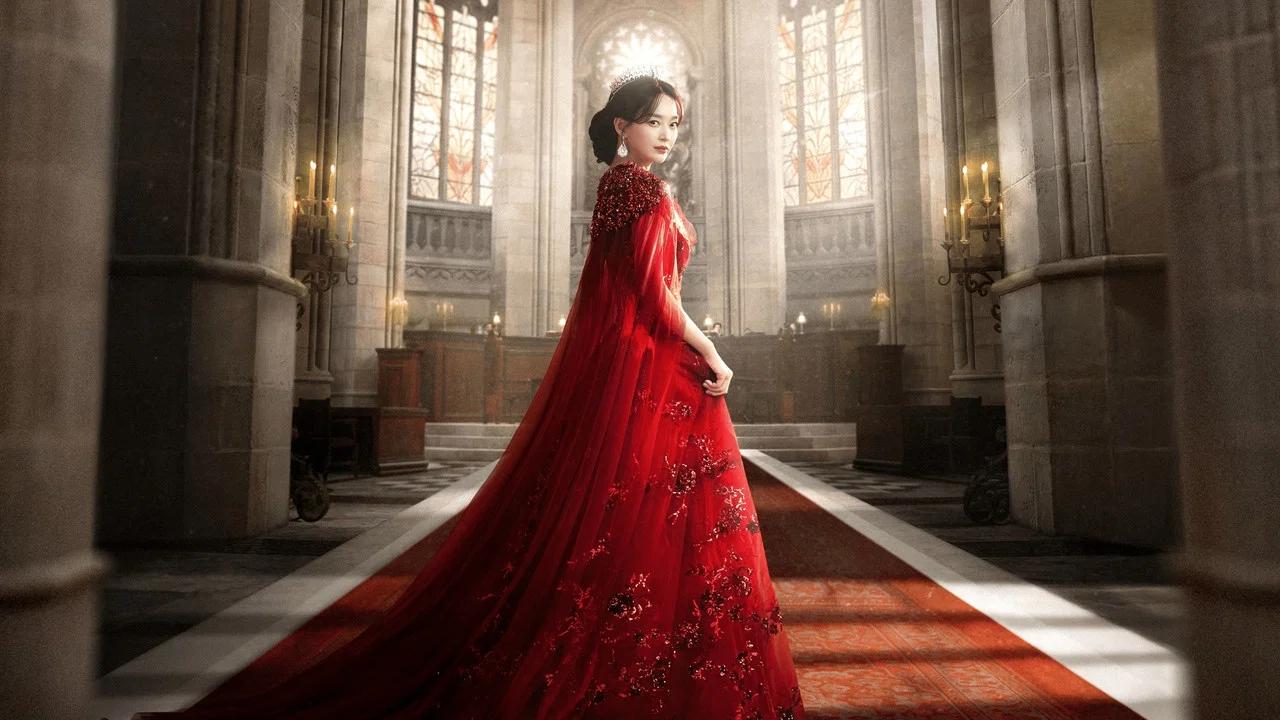
The Remarried Empress
Can Karayel • November 24, 2026 • Written with AI assistance
The Remarried Empress: plot in brief
The Remarried Empress follows Navier, the flawless empress of the Eastern Empire. When she learns the emperor plans to make his mistress empress, she treats divorce as a strategic move rather than a defeat and seeks to become empress again in another empire.
Summarize this with AI
Want to see more FoxFilm reviews in your Google results? Add us as a preferred source.
Add FoxFilm as a preferred source on GoogleRating
The Remarried Empress is an ambitious palace drama streaming on Disney+, bringing together Shin Min-a, Ju Ji-hoon, Lee Jong-suk and Lee Se-young. Adapted from a beloved fantasy romance novel, the series rereads the themes of revenge, marriage and power through a modern lens.
One of the Korean wave's greatest successes in recent years has been its ability to turn its own literary heritage into a global language of entertainment. That is exactly why The Remarried Empress matters. Drawing on Alphatart's widely read fantasy romance novel and its comic adaptation, the series offers more than a romantic palace story under the Disney+ banner. It also builds a bold narrative that questions a woman's place within power, treating the palace as both a cage and a chessboard. Considering that Turkey has an audience raised on palace intrigue like Muhteşem Yüzyıl (Magnificent Century) and Kösem, The Remarried Empress will taste familiar to this palate, but it moves at a completely different rhythm.
At the center of the story is Navier, the flawless empress of the Eastern Empire. She carries out her duty, her courtesy and her political acumen without compromise, and she reaches a breaking point when she learns that the emperor plans to make his mistress empress. The script's smartest move here is that it does not portray Navier as a tearful victim resigned to her fate. In the series, divorce is framed not as ruin but as a strategic move. If she cannot be empress where she is, she will be empress somewhere else. That line could be considered the manifesto of the entire series. The narrative intertwines heartbreak with the struggle for power, and it makes the viewer ask not only who loved whom, but also who deserved what.
The script's strength lies in how it refreshes elements that could be considered clichés, namely forced marriage, infidelity, forbidden love and revenge, by grounding them in the characters' psychology. Its weakness is that it sometimes moves too quickly through the story arc that fans of the source material know well. The novel's long internal monologues are handed over on screen to silence, glances and the use of space. This choice works in most scenes, but it can tire the viewer a little in the episodes that lay out political alliances.
On the directing side, the series uses palace aesthetics not as an ornate showcase but as a mirror reflecting the characters' state of mind. The symmetrical, cold and controlled halls of the Eastern Empire convey Navier's life, squeezed into strict protocol. In these sections the camera favors wide frames and static shots. As Navier's journey begins, the light warms, the composition relaxes and the frame breathes more widely. This visual transformation is a detail that carries the story's emotional arc without words. Costume and set design are part of this language too. Heavy fabrics, hair ornaments and jewelry are used not only for show but also to read shifts in status.
The cast is the series' greatest asset. As Navier, Shin Min-a manages to convey the pain stirring beneath her composure. There is no exaggeration in her performance. A blink, a slight lowering of the voice, or a hand held perfectly still says more than long dialogues could. As the emperor, Ju Ji-hoon creates a figure who is unlikable but understandable. This is a difficult balance, because the character's mistakes are not forgiven, yet they remain visible as a human weakness. Lee Jong-suk represents the alternative possibility that enters Navier's life, the door to a new empire. He uses his charisma with a quiet confidence and keeps the romantic tension from slipping into needless melodrama. Lee Se-young takes on the most controversial character. The role's many dimensions lift her out of being a merely villainous rival and turn her into a figure who unsettles the viewer.
Technically, the music leans on the familiar emotional orchestration of Korean productions. The passages dominated by strings are effective in the big confrontation scenes. Still, some recurring themes can feel predictable, especially in romantic moments. The editing keeps the rhythm well in the intrigue scenes. The shifts into silence after a major betrayal are among the series' strongest aspects. On the production side, the scale of the fantasy world and the visual distinction between the two empires are striking.
Looking behind the scenes, the first thing that stands out is that the story carries a large fan base from the world of novels and comics. For the producers, this means both an advantage and pressure, because this audience watches knowing Navier's every glance and every costume detail. The second interesting point is that the story treats the divide between the Eastern and Western empires as a cultural difference, not merely a geographical one. This creates differences in set design, color palette and approach to protocol. Third, the Korean drama industry's turn toward web novel and webtoon adaptations makes The Remarried Empress part of a larger transformation in the sector. Because this content comes with a pre-tested audience, it is a safe area for platforms but also a creatively demanding one.
In terms of popularity in Turkey, the series' chances look high. Korean dramas find a strong response, especially among young viewers and Disney+ subscribers. Palace intrigue, revenge and second chances, meanwhile, are narrative patterns Turkish audiences have loved for years. A similar echo can be expected worldwide as well, because Navier's story is about the moment a woman stops tying her own worth to someone else's approval.
In conclusion, The Remarried Empress is a remarkable series, even if not a flawless one. It leans on emotional strategy more than action scenes, and on small glances more than grand betrayals. Although the pace dips in some episodes, strong performances and a bold central idea keep the series afloat. For those who love palace dramas, revenge narratives and mature romance, this production is a candidate to be one of the most talked-about works of 2026. Navier's story reminds us that when the door to one empire closes, another can open, and it does so with surprising grace.
Frequently Asked Questions
What is The Remarried Empress about?
The series follows Navier, the flawless empress of the Eastern Empire, who reaches a breaking point when she learns the emperor plans to make his mistress empress. Rather than portraying her as a tearful victim, the story treats divorce as a strategic move: if she cannot be empress where she is, she will be empress somewhere else. Heartbreak and the struggle for power run through the whole plot.
What genre is The Remarried Empress?
The Remarried Empress is a Drama and Sci-Fi & Fantasy series. It is a palace drama that combines romance, revenge and political intrigue.
Is The Remarried Empress based on a true story?
No, it is not a true story. The series is adapted from Alphatart's widely read fantasy romance novel and its comic adaptation.
Who stars in The Remarried Empress?
The cast includes Shin Min-a, Ju Ji-hoon, Lee Jong-suk and Lee Se-young. The series is a 2026 palace drama on Disney+.
What language is The Remarried Empress in?
The Remarried Empress was originally made in Korean.
How many seasons and episodes does The Remarried Empress have?
So far The Remarried Empress has 1 season and 10 episodes in total.
Where can I watch The Remarried Empress?
In Turkey, The Remarried Empress is available on Disney Plus.